Most anabolic steroids in this market have a medical origin story, even if the medicine was discontinued decades ago. Boldenone is different, and the difference explains almost everything about how it is discussed: it is the one compound in the class whose primary commercial identity was never human medicine at all.
That single fact shapes its pharmacology, its reputation, and the way it is sold. This piece covers what the compound actually is, why the veterinary association matters, and where it sits against the compounds it gets compared to.
What boldenone is, structurally
Boldenone is a testosterone analogue with one structural change: an additional double bond between the first and second carbon atoms of the steroid backbone. That is the whole of the difference, and it does two things.
The first is that it slows the molecule’s metabolism, because the modified ring is less readily broken down by the enzymes that clear testosterone. The second is that it reduces — but does not eliminate — aromatisation. This is where a great deal of the internet commentary goes wrong, and it is worth being precise: boldenone is not a non-aromatising compound. It converts to oestrogen at a lower rate than testosterone, and that lower rate is meaningfully different from zero.
The distinction matters because it determines which side-effect profile the compound belongs to. The DHT-derived compounds — stanozolol, oxandrolone, drostanolone — genuinely do not aromatise, and their characteristic complaints (joint discomfort, unfavourable lipid changes) follow from that absence. Boldenone sits with testosterone on this question, not with them. A product page that markets it as “dry” is describing a different molecule.
The veterinary origin
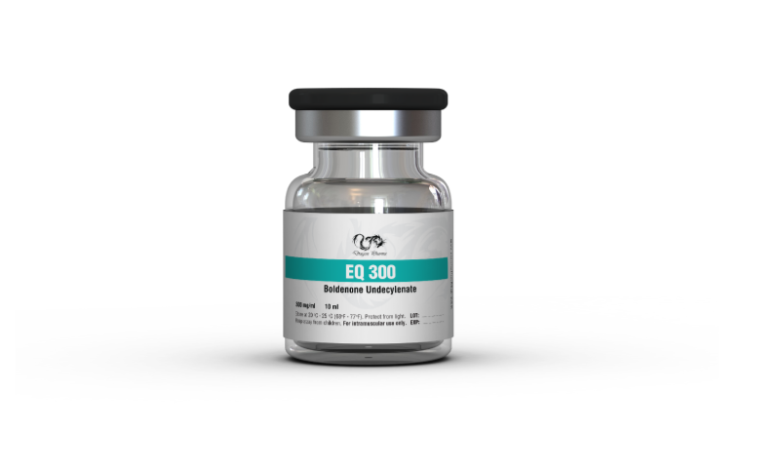
Boldenone’s commercial form is boldenone undecylenate, sold for decades as Equipoise, and its licensed use has been in veterinary medicine — principally in horses, where it was indicated for conditions involving inadequate muscle mass or debilitation.
That origin is worth understanding for three reasons.
It explains the ester. Undecylenate is a very long chain, chosen for a veterinary dosing interval rather than a human one. The result is a release profile measured in weeks, which is why the compound is described as slow-acting and why administration frequency is such a persistent topic in discussions of it.
It explains the documentation gap. A product developed for veterinary use does not come with the human clinical literature that an approved human medicine accumulates. There are no trials in people to point to, which means the entire human evidence base is anecdotal — a fact that is rarely stated as plainly as it should be.
And it explains the market position. Because the compound was never a human medicine, there is no approved human product to compare a research listing against. Every boldenone product sold in this market is, by definition, outside any human approval pathway.
The ester, and why it dominates the experience
With a chain this long, the ester is not a detail — it is most of what the product is in practice.
A buy boldenone online listing at 300 mg/ml carries the undecylenate ester in a concentration that is standard for this compound. A buy boldenone 500 listing is the higher-concentration variant of the same ester, which means less oil for the same quantity and, as with every high-concentration injectable, more local discomfort at the injection site as the trade.
What the concentration does not change is the release curve, because that is set by the ester rather than by the strength. This is the same arithmetic that applies across the injectable range: concentration is a handling figure, total content is a quantity, and the ester determines timing. Confusing the three is the most common purchasing error in the category, and it is harder to avoid here because the release is so slow that the curve is invisible in day-to-day experience.
How it compares to what it is usually put beside
Boldenone gets compared to two compounds, and both comparisons are instructive.
Against testosterone. Boldenone is a testosterone derivative with an aromatisation rate reduced but not removed. That makes the comparison closer than the marketing suggests: both aromatise, both deliver an androgenic signal, and the difference is in the rate rather than in the kind. A buy test enanthate online listing is the natural reference point, because enanthate and undecylenate are both long esters producing slow curves from the same parent hormone — one modified, one not.
Against the 19-nors. Nandrolone and trenbolone are structurally distinct and behave differently again, particularly in their progestogenic activity. Boldenone is not a 19-nor, and treating the three as a family because they are all “injectables that aren’t testosterone” flattens the differences that matter.
One consequence of that structural relationship is worth stating: because boldenone aromatises, the oestrogen-related effects associated with testosterone can occur with it, at a lower rate. That is a material difference from the DHT group, where those effects do not arise at all. It also means the compound does not belong in the “dry” category that the market assigns to non-aromatising products, however often the label implies otherwise.
There is also a practical hybrid in the catalogue: boldenone combined with testosterone enanthate in a single preparation. That is a blend, and it raises the documentation question that all blends raise, covered below.
The evidence question
Because boldenone’s licensed use was veterinary, the human evidence base is close to nonexistent, and that is a more significant gap than it sounds.
For an approved human medicine, the clinical literature establishes dose response, side-effect frequency and long-term outcomes in the population that actually uses it. Boldenone has none of that in people. What exists is veterinary data, which does not translate directly because the species differ in metabolism, and a body of reported human experience that is unverified, uncontrolled and drawn from a population that cannot confirm what it was using.
That absence has two practical consequences.
The first is that claims about the compound’s effects rest on accumulated anecdote rather than on measurement. This is true of much of the class, but it is more acute here because boldenone is one of the few compounds where a licensed human formulation never existed at all.
The second is that the side-effect profile is inferred rather than observed. The aromatisation question is the clearest example: the structural argument that boldenone converts to oestrogen at a reduced rate is sound and is the most defensible statement available, but the actual rate in humans at any given exposure is not established by any study.
Reading a listing that makes confident clinical claims about this compound is therefore informative about the seller rather than about the drug.
Detection
The detection profile is one of the compound’s distinguishing features and one of the least discussed.
Boldenone metabolites remain identifiable for a considerable period after use — longer than the ester’s active life would suggest, and in some cases measured in many months. The ester controls how long the compound is active; it does not control how long it remains detectable, because detection looks for metabolites rather than for the parent molecule.
That distinction is worth stating plainly because it is routinely confused. It matters most for anyone in a tested sport, and it is one of the reasons boldenone has a particular reputation in that context.
The market, and what to check
Because there is no approved human product, the verification burden sits entirely with the buyer, and boldenone has two specific difficulties.
The first is the ester. Undecylenate is long and the raw material is not cheap, so a product labelled boldenone undecylenate could plausibly be a shorter ester of the same compound — boldenone acetate and propionate exist — and the difference would only show up in the release behaviour over weeks rather than in any immediate effect. Identity confirmation by mass spectrometry is the only check that distinguishes them.
The second is concentration against total content. A 10 ml vial at 300 mg/ml holds 3,000 mg; a 1 ml ampoule at the same strength holds 300 mg. Both are labelled “300”, and the difference is not small.
Beyond those, the standard checks apply. A batch-specific certificate produced by an independent laboratory, with the chromatogram and mass spectrometry data rather than a headline purity figure. A batch number that matches the vial. Sterility and endotoxin results with the method stated, because this is an injectable. And a described cold chain, in specifics rather than adjectives.
The the full injectable range laid out side by side is the most useful way to read any of this, because the standard of documentation varies visibly across a catalogue and is invisible when you look at a single listing.
Questions people ask
Is boldenone a steroid? Yes — a testosterone analogue with an additional double bond, sold principally as the undecylenate ester.
Does it aromatise? Yes, though at a lower rate than testosterone. It is not a non-aromatising compound, and descriptions of it as “dry” are borrowing language from the DHT derivatives, where it does not belong.
Why is it associated with horses? Because its licensed use has been veterinary, principally equine. That origin explains the very long ester and the absence of human clinical literature, both of which shape the product.
How long does it stay active? The undecylenate ester produces a release measured in weeks, which is among the longest in the category. Detection, which is a different question, lasts considerably longer.
What is the key check when buying? Identity confirmation by mass spectrometry. Several boldenone esters exist, and only the identity result distinguishes undecylenate from a shorter one.
The bottom line
Boldenone is a testosterone analogue with one structural modification, a very long ester, and a veterinary rather than a medical history. Those three facts explain its slow release, its reduced-but-present aromatisation, and the thinness of the human evidence behind it.
The most useful correction this piece can offer is about the aromatisation question, because it is where the compound is most often misdescribed. Boldenone is not in the same category as the DHT derivatives, and a listing that says otherwise is either careless or selling to people who will not check. The second most useful thing is the ester: with a chain this long, the product is mostly a release profile, and the only way to verify which profile you have bought is the analytical documentation.