That scratching sound in your ceiling isn’t your imagination, and it’s definitely not your house settling. If you’ve been hearing faint rustling, high-pitched squeaking, or fluttering noises after dark, there’s a good chance you have unwanted guests roosting somewhere in your home. Bats are creatures of habit, and once they find a cozy, dark space to call home, they tend to stick around for good.
Homeowners often dismiss these sounds until the problem becomes impossible to ignore. By the time most people notice the smell or spot droppings near an entry point, a small colony may have already settled in for the long haul. Understanding what’s happening in your attic, walls, or eaves is the first step toward reclaiming your home.
Why Bats Choose Your Home in the First Place
Bats aren’t picky about architecture, but they are picky about comfort. Attics, soffits, chimneys, and wall voids offer the exact conditions bats look for: warmth, darkness, and protection from predators. Older homes with gaps in the roofline or damaged vents are especially vulnerable, but even newer construction isn’t immune if there’s an opening the size of a dime.
Once a bat finds a suitable entry point, it doesn’t just visit. It brings the rest of the colony along. Bats are social animals, and a single scout can lead dozens of others to the same roosting site within days.
The Hidden Risks of Letting a Colony Stay
It’s tempting to assume a few bats aren’t causing any harm, especially since they’re mostly active at night and easy to ignore. But the risks add up quickly the longer they stay.
Health Concerns
Bat droppings, known as guano, can harbor a fungus that causes histoplasmosis, a respiratory illness that spreads when spores become airborne. Guano accumulation also creates unpleasant odors and can attract other pests looking for an easy meal.
Structural Damage
Over time, guano and urine can seep into insulation, drywall, and wood framing, leading to costly repairs. What starts as a minor infestation can turn into thousands of dollars in structural damage if left unaddressed.
Legal Protections
Many bat species are protected under state and federal wildlife laws, which means removal isn’t as simple as sealing an entry point and calling it done. Improper handling can result in fines and, more importantly, unnecessary harm to the animals.
Signs You Might Have a Bat Problem
Not sure if what you’re hearing is actually bats? Here are the most common indicators homeowners report:
- Scratching or fluttering sounds in walls or ceilings, especially at dusk and dawn
- A musty, ammonia-like odor coming from vents or attic spaces
- Small, dark droppings resembling mouse droppings near windows or entry points
- Grease-like stains around exterior openings where bats squeeze through
- Sightings of bats exiting your roofline at twilight
If any of these sound familiar, it’s worth taking a closer look before the situation grows.
Why DIY Bat Removal Often Backfires
A quick search online might convince you that sealing up a hole or setting up a bright light will solve the problem. Unfortunately, bats are far more resilient and resourceful than most DIY solutions account for. Sealing an entry point while bats are still inside traps them, leading to worse odors, decomposition issues, and even more damage as they try to find another way out.
Because of the legal protections surrounding many bat species, timing and method matter. Removal has to be done in a way that safely encourages bats to leave on their own, typically through exclusion devices, rather than trapping or harming them.
How Palm Beach Wildlife Services Handles Bat Colonies Safely
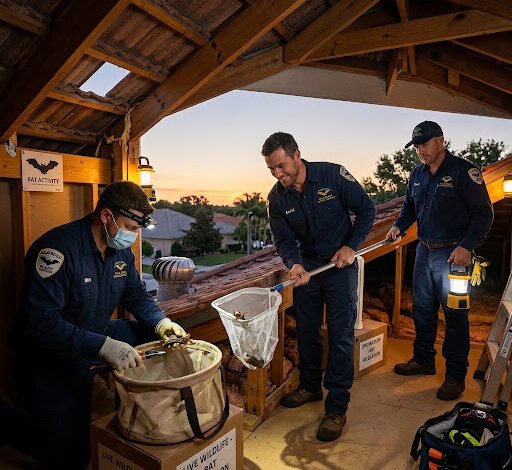
Bat Removal begins with a thorough inspection that identifies every entry point bats are using, no matter how small or hidden, creating the foundation for a humane, long-term solution to your bat problem. Palm Beach Wildlife Services uses this information to design an exclusion strategy tailored to your home’s specific layout, ensuring bats can exit safely without being able to return.
Once the colony has vacated, the team seals entry points with durable materials designed to withstand weather and wear. This isn’t a one-size-fits-all patch job. Every home has unique vulnerabilities, and addressing them properly is what prevents bats from finding their way back in next season.
Cleanup is just as important as removal. Palm Beach Wildlife Services also handles guano remediation, sanitizing affected areas to eliminate lingering odors and reduce health risks for your family. This step is often overlooked by less experienced providers, but it makes a significant difference in air quality and long-term comfort.
What to Expect When You Call the Experts
Reaching out doesn’t mean committing to an expensive, drawn-out process. Most cases follow a straightforward path:
- Inspection: A trained technician assesses your property, identifying active roosts and entry points.
- Exclusion Plan: A customized strategy is developed based on the size of the colony and the structure of your home.
- Safe Removal: Bats are encouraged to leave through humane, one-way exclusion devices.
- Sealing and Prevention: All entry points are sealed to prevent future access.
- Cleanup: Affected areas are cleaned and sanitized to remove guano and odor.
Each step is handled with care, both for your home and for the bats themselves, since these animals play an important role in local ecosystems by controlling insect populations.
Protecting Your Home for the Long Run
Once bats are removed and entry points are sealed, ongoing prevention becomes much easier. Regular roof inspections, prompt repairs to damaged vents or soffits, and sealing small gaps before they become bigger problems all go a long way toward keeping your home bat-free.
If you’ve been hearing strange noises after dark, don’t wait for the problem to escalate. Reach out to Palm Beach Wildlife Services for an inspection, and let a team of experienced professionals help you take back your home, safely and humanely.