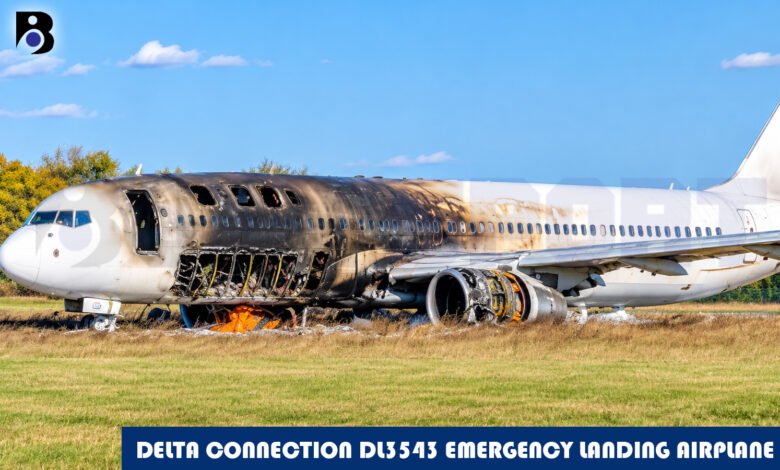
If you searched for “Delta Connection DL3543 emergency landing,” you probably want a clear answer. What happened? Was anyone hurt? Why did the pilots turn back? This article gives you the facts we can check, explains the words used in the news, and tells you what is still unknown.
Quick Facts
- Flight: Delta Connection DL3543
- Route: Minneapolis-Saint Paul International Airport (MSP) to Chicago Midway International Airport (MDW)
- Date: July 7, 2025 (a few websites say July 6, so dates can differ by source)
- Aircraft: Embraer E175, registration N259SY
- Problem: The plane stopped climbing at about 21,000 feet and turned back
- Emergency code: Squawk 7700
- Result: Safe landing back at MSP on runway 12R, about 37 minutes after takeoff
What Happened on Flight DL3543?
Flight DL3543 was a short regional trip. It was planned as a flight of about one hour from Minneapolis to Chicago Midway.
According to the flight tracking news site AIRLIVE, the plane took off from Minneapolis and began to climb as normal. About 10 minutes later, it stopped climbing at around 21,000 feet. Then the pilots turned the plane around and told air traffic control they had an emergency by using the code 7700.
The aircraft landed again at Minneapolis, on runway 12R, 37 minutes after it had taken off. It then drove to stand C12, which is a gate area at the airport.
That is the main story. The plane did not crash, and the sources I found did not report an evacuation, a fire, or any injuries.
Which Airline Flew the Plane?
This part confuses many readers, so let us go slowly.
Delta Connection is not one airline. It is a brand name. Delta sells the ticket, but smaller partner airlines fly some of the planes. These partners use Delta colors and Delta flight numbers, so for a passenger it feels like a Delta flight.
Some blogs say that Endeavor Air flew DL3543. But Delta’s own fleet page says its Embraer E175 jets are flown by two Delta Connection airlines, Republic Airways and SkyWest Airlines. Endeavor Air flies a different plane type, the Bombardier CRJ.
The plane on this flight, N259SY, was an Embraer E175. Flight tracking sites such as Flightradar24 list it as a SkyWest plane. The “SY” at the end of the registration also matches the SkyWest style. So SkyWest is the most likely operator. If you plan to write or share this story, say “Delta Connection” first, and add that the plane was listed as a SkyWest aircraft.
What Does “Squawk 7700” Mean?
You will see “squawk 7700” in almost every article about this flight. It sounds scary, so here is what it really means.
Every airplane has a device called a transponder. It sends a four-digit code to air traffic control radar. Controllers use these codes to see which plane is which.
Three codes are special:
- 7500 means unlawful interference, such as a hijacking
- 7600 means the radio has stopped working
- 7700 means a general emergency
So 7700 is a “catch-all” code. Pilots can use it for many things, such as a sick passenger, an engine warning, low fuel, or a bird strike. It does not mean the plane is about to crash. It also does not mean the crew has lost control. It simply tells controllers, “We need priority.”
Pilots do not have to use the code in every emergency. A pilot who spoke to Flightradar24 explained that some crews decide not to change it. On DL3543, they did, and this helped controllers clear the way for a fast return.
Why Did the Pilots Turn Back?
The honest answer is that nobody has said in public. As far as I could find, Delta, SkyWest, and the US Federal Aviation Administration (FAA) have not shared an official cause.
Some blogs guess. A few say it may have been an engine warning. Others mention a pressure problem in the cabin. These are guesses, and none of them comes from an official report. I would not repeat them as facts.
What we can say is this. The crew saw a reason to stop the climb and return. Pilots are trained to treat any strange warning seriously. When they are not sure, the safe choice is to land at an airport with the best help nearby. Minneapolis is a large airport and also a Delta hub, so it was a good place to come back to.
What Is a Precautionary Return?
Many people hear “emergency landing” and picture a crash. In real life, most emergency landings are much calmer.
A precautionary return means the crew decides to land early, even if the plane is still flying well. They would rather be on the ground and check the problem than keep going and hope it stays small.
Here is how it usually works:
- The crew gets a warning light, a strange sound, or another sign of a problem.
- They follow a written checklist and fly the plane first.
- They tell air traffic control. They may declare an emergency and set 7700.
- Controllers give the plane priority and a clear path to the runway.
- Fire and rescue teams at the airport often get ready near the runway, just in case.
- The plane lands, and engineers check it.
Pilots practice these steps again and again in flight simulators. That is why most of these events end without any harm.
The flight time here matches this picture. The plane was in the air for 37 minutes in total, and the turn back started about 10 minutes after takeoff. The crew had time to slow down, burn some fuel or prepare the plane, and line up for a normal landing.
What About the Passengers?
The sources I found do not say how many people were on board. They also do not describe what passengers saw or felt. I did not find reports of injuries.
If you were on a flight like this, you would probably feel the plane turn and hear the crew speak. Flight attendants would ask you to sit down and keep your seat belt fastened. Many people feel scared in this moment, and that is normal. The calm voice of the crew and the quick landing help a lot.
After a return like this, the airline usually checks the plane and finds a new plane or a new time for the passengers. I could not find details about what Delta did for the people on DL3543, so I will not guess.
Is the Embraer E175 a Safe Plane?
The Embraer E175 is a very common regional jet in the United States. Delta says its E175 jets carry about 70 to 76 passengers, depending on the version. SkyWest alone flies more than 260 of them, according to recent company and industry data.
One emergency return does not tell us that a plane type is unsafe. Airlines keep a close eye on warnings and repair problems before the plane flies again. A turn back like this one is actually the system working as planned.
Do Not Mix It Up With Another Delta Event
In late July 2025, there was a different Delta event at the same airport. Delta Flight 56, an Airbus A330 flying from Salt Lake City to Amsterdam, had severe turbulence and landed in Minneapolis. News reports said 25 people were taken to hospital.
That event had nothing to do with DL3543. Different flight, different plane, different problem. Some people mix them up because both ended in Minneapolis in the summer of 2025.
What Is Still Unknown
Here are the questions that are still open:
- What warning or problem made the crew stop the climb?
- How many people were on board?
- Did the plane need repairs, and how long did that take?
- Will Delta or SkyWest share a final cause?
If an official statement comes out later, it will be a better source than any blog. For the latest facts, check Delta’s news page, SkyWest’s press page, and the FAA.
What We Can Learn From DL3543
Here are some simple lessons from this flight:
- Turning back is a normal choice. Pilots do not need to wait for a big problem. They can act early.
- Squawk 7700 is a tool, not a sign of disaster. It gets help ready for the crew.
- Check your sources. Some websites mix up the date, the airline, or the cause. Official sources and flight tracking data are more trustworthy.
- Air travel is built with many safety layers. Training, checklists, radar, and rescue teams all work together.
Final Thoughts
The Delta Connection DL3543 emergency landing was a short, safe return to Minneapolis. The crew saw a reason to stop climbing, used the right emergency code, and brought the plane back in 37 minutes. That is how the system should work.
We still do not know the exact cause, and that is okay. Until an official source tells us more, the best thing to do is stick to the facts we have and be careful with guesses.
Frequently Asked Questions
What caused the Delta Connection DL3543 emergency landing?
No official cause has been shared in public. We know that the crew stopped the climb at about 21,000 feet, declared an emergency with squawk 7700, and returned to Minneapolis. Some blogs suggest an engine or pressure issue, but those are only guesses. The best way to be sure is to wait for a statement from Delta, SkyWest, or the FAA.
Was anyone hurt on Delta Connection flight DL3543?
I did not find any report of injuries, a crash, or an evacuation. The plane landed safely on runway 12R at Minneapolis-Saint Paul International Airport. Still, the airline has not shared a full passenger report, so it is fair to say “no injuries were reported” and not “we are sure no one was hurt.”
Does squawk 7700 mean the plane was in great danger?
No. Squawk 7700 means a general emergency. It can be used for a wide range of problems, including small ones, like a warning light or a sick passenger. It tells air traffic control to give the plane priority so it can land fast and safely. Many flights that use 7700 land without any trouble.