You type “best piononos de Santa Fe near me” into Google. Maybe a friend told you about this tiny cake. Maybe you saw a photo of a small, round pastry with a golden top and wanted one right away. Good news: this guide will help you understand what a pionono is, where it comes from, and how to find a fresh, tasty one.
Let’s start with the basics.
What Is a Pionono de Santa Fe?
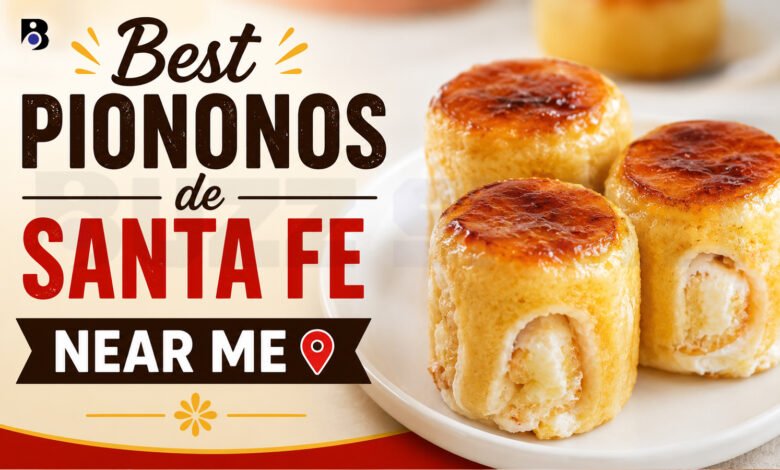
A pionono de Santa Fe is a small sweet pastry from southern Spain. It is made with a thin layer of sponge cake that is soaked in syrup. The cake is rolled into a short cylinder. On top, there is a layer of cream that is toasted until it turns golden and a little sweet and smoky.
It is a very small treat. One piece is only about 4 cm tall, so you can eat it in one or two bites. Most pieces come in a little paper cup or basket, which makes them easy to carry.
The flavor is soft, sweet, and warm. Many people taste cinnamon first. The sponge feels wet and tender, and the top is creamy. It is not a heavy dessert, so many people like to eat two or three at once.
Where Do Piononos Come From?
The pionono comes from the town of Santa Fe, which is about 10 km west of the city of Granada in Spain. Many sources say a pastry chef called Ceferino Isla made the first one in 1897 in his shop, Casa Ysla.
The name has a fun story. He named the cake after Pope Pius IX. In Italian, the Pope’s name is Pio Nono, and the name “pionono” comes from that. Some stories say the shape and the toasted top remind people of the small cap that the Pope wore. This part is a nice story that Granada people like to tell, so enjoy it, but do not worry if different sources tell it a little differently.
Here is another fact you may like. In 1916, the pastry was shown to King Alfonso XIII of Spain. The king liked it so much that Casa Ysla became an official supplier to the royal house. For some years, the shop even used a royal crown in its logo.
Today, the pionono is one of the best-known sweets in Granada. The family that started it still runs the original shop in Santa Fe, and there are other shops in Granada city.
What Is Inside a Real Pionono?
Every bakery has its own way, and the original recipe is kept secret. But the main parts are the same in most places:
- Thin sponge cake. It is soft, light, and often flavored with cinnamon.
- Syrup. The sponge is soaked in sweet syrup, so each bite is moist.
- Cream filling. A smooth cream goes inside the roll.
- Toasted cream on top. The top is heated until it is golden. This is what gives the pionono its special look and taste.
If you try a pionono and it feels dry, hard, or too sugary, it is probably not fresh, or it was not made with care. A good one should feel soft and moist, with a thin crisp layer on top.
Is “Santa Fe” in Your Search Spain or New Mexico?
This is a small problem many people have. There is also a city called Santa Fe in New Mexico, USA. When you search for “Santa Fe near me,” Google may show you restaurants and cafes from that city. Those are great places to eat, but they are not where piononos come from.
For this treat, you want Santa Fe in Granada, Spain. So if you live in the USA, the UK, or another country, your “near me” search may not give you the original shop. You may find a Spanish bakery, a Latin American bakery, or a cafe that sells a similar cake.
Spanish Piononos and Latin American Piononos
Here is something that confuses many people. In some Latin American countries, “pionono” means a different dessert. It is usually a long, thin sponge cake that is spread with filling and rolled into a log, a bit like a Swiss roll. It can also be a savory snack in some places.
The Spanish pionono de Santa Fe is much smaller, and it has the toasted cream on top. Both are tasty, but they are not the same thing. When you read a bakery menu or a review, check which one the shop means. A photo is the fastest way to know.
Where to Find the Best Piononos in Granada
If you are in Spain or plan a trip there, these are good places to start.
Casa Ysla in Santa Fe
This is the original shop, where the story began. The Isla family has made piononos here for more than a hundred years. If you can visit only one place, many people say this should be the one. Going to the town of Santa Fe also gives you a nice short trip from Granada.
Casa Ysla in Granada city
You do not have to leave the city to taste the original recipe. Casa Ysla has shops in Granada, including one on Avenida de la Constitución and another branch near the Caleta area. Travel guides list these shops as busy, so you may have to wait a little. Many people buy a box and eat the piononos later.
Pastelería López-Mezquita
This is a well-loved pastry shop in the center of Granada, on Calle Reyes Católicos. Guides often describe their piononos as a bit sweeter. It is a good place if you want to compare two styles in one day.
Opening times can change, so check the shop’s page or call before you go. Do not forget that many shops in Spain close for a break in the afternoon.
How to Find Good Piononos Near You
Now let’s talk about your real question. What if you are not in Granada? Here are some simple steps.
1. Search with extra words
Instead of only typing “piononos near me,” try these:
- “Spanish bakery near me”
- “pionono Granada style near me”
- “Latin American bakery pionono near me”
- “Spanish pastries near me”
These small changes can give you better results.
2. Read the reviews and look at the photos
Look for reviews that talk about the taste and the texture. Photos from customers are very useful. If you see a small, round cake with a golden top, that is the Granada type. If you see a long rolled sponge cake, it is the other type.
3. Call the shop and ask
A short call can save you a trip. Here are some good questions:
- Do you make your piononos today?
- Is this the Granada style or the rolled cake style?
- Can I order a box ahead of time?
- Do you do pickup or delivery?
A good baker is happy to answer these questions.
4. Check Spanish food stores and cafes
Some Spanish grocery stores and cafes sell pastries from Spain. Some even make their own. It is worth asking, because these places often care about real recipes.
5. Think about ordering online
Some Spanish bakeries send boxes of piononos to many places. If you cannot find a shop near you, this can be a good choice. Look at how the pastries are packed and how fast they arrive. Soft pastries need good care on the way.
How to Tell If a Pionono Is Fresh
Fresh pastry makes a big difference. Here is a simple checklist you can use in any shop.
- The sponge is soft and wet. It should not look dry or crumbly.
- The top is golden. It should not be burnt or gray.
- The smell is warm. You should smell cinnamon, sugar, and cream, not something old.
- The shop is busy. When many people buy a pastry, the stock changes often.
- The staff can answer questions. If they know when the pastries were made, that is a good sign.
If you are not sure, ask for the freshest box. Most bakers will be happy to help.
How to Store and Serve Piononos
If you buy a box, you can keep it in a cool place. One guide says the cinnamon sponge stays good for about three days at room temperature. If your kitchen is hot, or the cream is soft, it is safer to keep the box in the fridge and take it out a few minutes before you eat. This lets the pastry get soft again and brings back the flavor.
Some tips:
- Keep the pastries in their paper cups.
- Do not stack heavy things on top of the box.
- Do not leave the box in a hot car.
- Eat them within a day or two for the best taste.
A six-piece box is a popular size. It travels well and works as a nice gift.
Best Ways to Enjoy Piononos
You can eat a pionono any time you like, but here are some favorite ways.
With coffee or tea. The sweet cinnamon taste goes well with a strong coffee. It is a classic afternoon snack in Spain.
As a small dessert. After a big meal, one or two piononos feel just right. They are sweet but not heavy.
As a gift. A box of piononos is a kind and easy present for a friend, a host, or a teacher. If you are visiting Granada, many travelers take a box home.
For a party. Because the pieces are small, they are great for birthdays and family meetings. Guests can try one without feeling full.
New Flavors You May Find
The classic pionono is still the favorite. But some bakers now try new ideas. For example, some shops have made versions with dark chocolate, white chocolate, or tangerine. Others make ice cream or other desserts inspired by the pionono.
If you love the old taste, start with the classic one. After that, try a new flavor and see which one you like best.
Common Mistakes to Avoid
Many people make the same small mistakes when they look for piononos. Here are the most common ones.
- Choosing only the closest shop. Near is nice, but fresh and well made is better.
- Mixing up the two types. Make sure you know if the shop sells the small Granada pastry or the big rolled cake.
- Forgetting to ask about freshness. A short question can save you from a dry cake.
- Buying too early. If the party is on Saturday, do not buy on Wednesday.
- Keeping them in a warm place. Heat makes the cream soft and the sponge heavy.
Final Thoughts
The pionono de Santa Fe is a small cake with a big story. It began in a little town near Granada more than 125 years ago, and today people still enjoy it in Spain and in many other places. If you live near Granada, visit Santa Fe and try the original. If you live far away, use the tips in this guide to find a Spanish or Latin American bakery near you.
Always look for fresh, soft pastries, ask simple questions, and check photos before you buy. With a little care, you can enjoy a very good pionono, even if you are thousands of kilometers from Spain.
Now it is your turn. Which one will you try first?
Frequently Asked Questions
Where were piononos invented?
Piononos were first made in the town of Santa Fe, close to Granada in southern Spain. Most sources say the pastry chef Ceferino Isla created them in 1897 at his shop, Casa Ysla. He named the cake after Pope Pius IX, known in Italian as Pio Nono.
Are Spanish piononos the same as piononos in Latin America?
No, they are not the same. The Spanish pionono de Santa Fe is a small, soft cake soaked in syrup, with cream that is toasted on top. In many Latin American countries, a pionono is a long, thin sponge cake that is filled and rolled, like a Swiss roll. Always check the photo or ask the shop which kind they sell.
How long do piononos stay fresh?
It depends on the shop and the weather. One travel guide says the cinnamon sponge can stay good for about three days at room temperature. Still, they taste best on the day you buy them or the day after. If it is hot, keep them in the fridge, and take them out a few minutes before you eat.