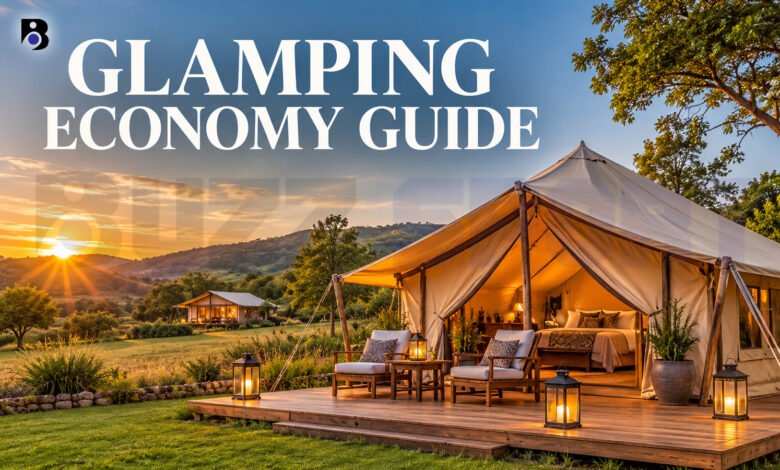
Glamping is no longer a small trend for people who dislike sleeping on the ground. It has grown into a real business area inside the travel world. Owners build domes, safari tents, cabins and treehouses, and guests pay good money to stay in them. This guide explains the glamping economy in simple words. You will learn how big the market is, what guests pay, what it costs to start a site, and how owners make money. You will also see the risks, so you can make a smart choice.
What Is the Glamping Economy?
Glamping means “glamorous camping”. Guests sleep in nature, but they get comfort too. Think of a real bed, power, heating and often a private bathroom.
The glamping economy is all the money that moves around this idea. It includes the people who build and run the sites. It also includes the companies that sell tents, domes and booking tools. Finally, it covers the local shops, guides and restaurants that gain from the visitors.
Today, glamping covers many types of stays. It includes safari-style tents, treehouses, vintage Airstreams and converted school buses. Each type attracts a slightly different guest.
How Big Is the Glamping Market?
The numbers depend on who you ask. Different research firms use different methods, so their results do not match. That is normal for a young market.
Here are a few estimates for the global market:
- Global Market Insights says it was worth USD 2.6 billion in 2025 and may reach USD 5.6 billion by 2035.
- Grand View Research puts it at USD 3.79 billion in 2025, growing to USD 7.87 billion by 2033.
- Fortune Business Insights says USD 3.71 billion in 2025, with a yearly growth rate of 10.67% up to 2034.
So the safe message is this: the market is worth roughly 2.6 to 3.8 billion dollars today. Most reports expect it to double in the next 8 to 10 years.
Location matters too. Europe held the largest share in 2025, at 37.05%. Another report says Asia Pacific may grow the fastest, at 13.1% a year. Treat all forecasts as estimates, not promises.
Why More People Choose Glamping
Several simple reasons explain the growth.
First, many people want to relax and escape stress. Grand View Research names de-stressing and relaxation as the main growth drivers.
Second, younger travelers love unique places to stay. They like photos, stories and new experiences. Market reports link the growth to social media and wellness travel. One guide says social media brings 20 to 30% of bookings for some hosts.
Third, remote work helps. People can stay longer when they can work from a cabin with good Wi-Fi. Some guides call this a “workcation”.
Finally, many guests want comfort. They enjoy the outdoors, but they do not want a cold night in a thin tent. Glamping gives them both.
How Much Does Glamping Cost for Guests?
Prices change a lot by place and by type of stay. Here is a simple picture from industry guides.
- Budget glamping: about $80 to $150 per night.
- Mid-range stays: about $150 to $300 per night. One guide says most bookings fall in this range.
- Luxury stays: about $300 to $600 or more per night.
Location can add a lot. The same guide says mountain and coastal sites often charge 20 to 40% more than rural ones.
The unit type matters too. One travel brand lists luxury safari tents at $150 to $350 per night. It lists geodesic domes at $250 to $600, and treehouses at $300 to $800. For comparison, regular camping often costs just $20 to $40 per night.
In the UK, prices are lower in pounds. A camping versus glamping guide from Wigwam Holidays shows about £30 to £40 for camping and about £80 to £100 for glamping.
If you are a guest on a budget, try these ideas:
- Travel in the shoulder season, in spring or autumn.
- Stay on weekdays, because weekends cost more.
- Pick a simple pod or bell tent instead of a dome.
- Bring your own food and cook at the site.
What Does It Cost to Start a Glamping Business?
This is the question many readers care about most. The honest answer is “it depends”, and the range is wide.
One start-up guide says a total startup cost is between $20,000 and $200,000. That fits small setups on land you already own. A larger guide that plans a six-unit site gives a much higher range, from about $225,000 to over $1 million. Land is the main reason for the gap. It can cost anything from $50,000 to more than $500,000.
Here are the main cost areas for a small site:
- Land: the biggest cost, unless you already own it.
- Site work: roads, water, power, drains and platforms.
- The units: safari tents cost about $15,000 to $35,000 each in one guide. Domes cost $20,000 to $50,000. Treehouses can reach $150,000.
- Permits and legal work: one guide estimates $5,000 to $25,000.
- Furniture and extras: beds, linen, heaters and outdoor seating.
- Marketing and tech: a website, photos and a booking system.
- A safety fund: many guides advise keeping 10 to 15% for surprises.
Most new owners start small, with 4 to 8 units. If you already have land, a smaller start lowers your risk a lot.
Please note that some of these cost tables come from business blogs, and the authors do not name every source. Use them as a rough guide. Ask local builders for real quotes before you decide.
How Glamping Businesses Make Money
The main income is the nightly rate. Guides report rates of $150 to $600 or more per unit. Holidays often bring a 20 to 40% higher price. Many sites also ask for a stay of two or three nights.
Owners also earn from extras. These can include:
- Breakfast baskets and local food
- Guided walks, bike rides or fishing trips
- Hot tubs, spa treatments and yoga classes
- Small events, such as weddings or team retreats
- Gift items and firewood
One guide claims that extras can raise income per guest by 25 to 40%. That number is not backed by a named study, so treat it as a hopeful figure. Still, the idea is sound. A guest who is already on site is easy to sell to.
Pricing also matters. Several guides say smart, flexible pricing beats one fixed price. You can charge more on busy weekends and less on quiet weekdays. Claimed gains range from 15% to 30% a year.
Is Glamping Profitable?
It can be, but it is not a quick win. Results depend on your location, your design and your costs.
Here is a simple way to think about it. One guide says an average site fills 50 to 65% of its nights. It charges around $180 to $280. A strong site fills 65 to 80% of nights and charges $280 to $450. A weak site stays under 40% full.
Costs eat a big share of the income. The same guide says running costs are about 40 to 60% of revenue. Another guide lists these common costs:
- Booking platform fees: 10 to 15% of revenue
- Cleaning: 15 to 20%
- Insurance: 5 to 8%
Net profit margins in that guide are about 15 to 25% for a small site. For a larger site, they reach 25 to 38%. Break-even often comes in 2 to 4 years. A full return on the money usually takes 4 to 7 years.
There is also good news on pricing. The 2025 US Glamping Industry Report, as quoted by Rentals United, puts the average daily rate near $251 per night. That is about 21% higher than in 2023. People are paying more, and many guests plan to come back.
Keep one thing in mind. These figures come from industry and vendor blogs, not from audited accounts. Real results vary a lot, so build your own plan with careful, lower numbers.
Main Risks and Challenges
Glamping looks lovely on social media, yet the work is real. Think about these risks before you start.
Seasons. Many sites earn most of their money in a short summer period. One guide says 60 to 70% of yearly revenue can fall in just 4 to 5 months. Winter can be very quiet unless you add heating and a cozy offer.
Permits. Zoning rules differ by place. Approval can take six to twelve months, depending on the area. In rural places, water and septic systems can also cost a lot.
Wear and tear. Weather, pests and heavy use damage outdoor units faster than a normal room. Canvas and awnings may need a new cover every 3 to 7 years.
Guest expectations. Rain, insects and weak Wi-Fi can cause bad reviews. Clear information before arrival helps a lot.
Competition. Popular places can get crowded. Hotels, holiday homes and campsites all fight for the same guests.
Cost surprises. Land, power and water often cost more than planned. This is why a safety fund matters.
Trends to Watch in 2026
The market keeps changing. These trends appear in many recent guides:
- Eco design. Green sites with solar power and rainwater systems attract careful travelers and can cut running costs.
- Winter stays. More guests want hot tubs, wood stoves and snow views.
- Pet-friendly sites. Owners report higher bookings when dogs are welcome.
- Digital detox packages. Some sites sell “tech-free” stays at a higher price.
- Workcation spaces. Good Wi-Fi and a real desk can bring longer bookings.
- Smart tools. Keyless entry, online messages and channel managers save time and reduce mistakes.
- Team retreats. Companies now book calm nature spots for training and wellness days.
Easy Tips for New Glamping Owners
If you want to start, these steps can keep you safe.
- Check the rules first. Talk to your local council about zoning, fire safety and water rules before you spend money.
- Start small. Open with a few units, learn from guests, and then grow.
- Study your area. Look at nearby sites, their prices and their reviews. Find a gap you can fill.
- Choose a clear style. A single strong idea, like “stargazing domes”, is easier to sell than a mix.
- Invest in photos. Great pictures help bookings more than almost anything else.
- Plan for all seasons. Add heating, covered areas and offers for quiet months.
- Get the right insurance. A home policy usually does not cover paying guests.
- Reply fast and be kind. Good reviews bring repeat guests, and repeat guests save marketing money.
Conclusion
The glamping economy is growing, and the demand is real. Guests want comfort in nature, and they will pay more for a special place. For owners, the chance is good, but it needs careful planning. Costs can be high, seasons can be short, and rules can take time.
Do your homework before you spend a dollar. Use lower income numbers in your plan, ask for real quotes, and start small. If you are a guest, use the money tips above and enjoy a trip that feels special without paying too much.
Frequently Asked Questions
What is the glamping economy?
The glamping economy is the business world around luxury camping. It covers the sites, the builders, the booking tools and the local shops that earn money from glamping guests. Research firms value the global market at about 2.6 to 3.8 billion dollars today, and they expect strong growth.
How much does it cost to start a glamping business?
The cost depends on land, size and the type of unit. A small setup on land you already own may cost from $20,000 to $200,000, according to one start-up guide. A six-unit site that includes land can cost several hundred thousand dollars or more. Always ask for local quotes.
Is glamping a good business?
It can be a good business with the right place and a clear plan. Reports suggest a small site may reach a profit margin of 15 to 25%, and break-even often takes 2 to 4 years. But seasons, permits and repair costs are real risks, so test your numbers carefully.