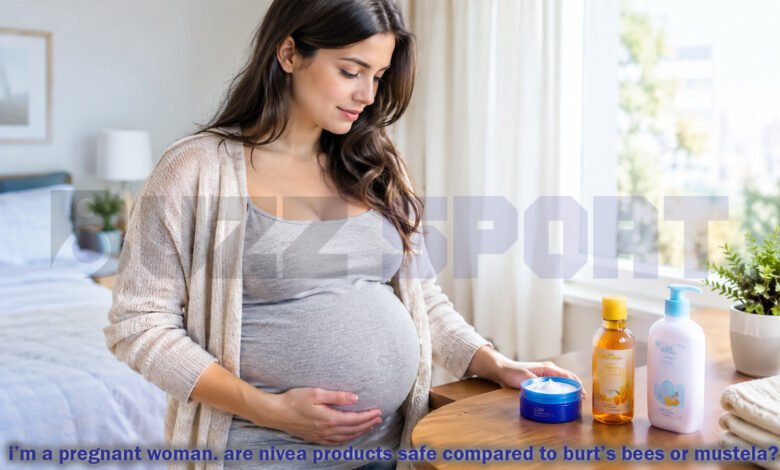
Pregnancy changes many things, and your skincare routine is one of them. All of a sudden, you start reading ingredient labels you never looked at before. You may wonder if your favorite body lotion is still okay to use, or if you should switch to a “pregnancy safe” brand. If you have asked yourself, “I’m a pregnant woman, are Nivea products safe compared to Burt’s Bees or Mustela?”, you are not alone. This is one of the most common questions pregnant women search for online.
Why Pregnancy Changes the Skincare Rules
During pregnancy, some substances can pass through your skin and into your bloodstream. In small amounts, this is usually not a problem. But a few ingredients have been linked to risks for the baby, so doctors recommend avoiding them just to be safe. This is why so many pregnant women start checking labels more closely, even for products they have used for years without any issue.
Ingredients to Watch Out For
Before comparing brands, it helps to know which ingredients doctors usually tell pregnant women to avoid or limit. Here are the main ones.
Retinoids
Retinoids are a form of vitamin A. You will see them listed as retinol, retinal, tretinoin, or retinyl palmitate. They are popular in anti-aging creams because they help with fine lines and skin texture. However, the whole retinoid family is typically avoided during pregnancy, which means a large part of many anti-aging product ranges becomes off-limits for the nine months of pregnancy. Doctors say higher levels of retinoids have been connected to serious problems in babies, including birth defects, craniofacial issues, and heart and thymus problems, as well as developmental delays.
Hydroquinone
Hydroquinone is used to fade dark spots and treat pigmentation problems like melasma, a skin condition that often shows up during pregnancy. Unfortunately, hydroquinone has a high rate of absorption through the skin, meaning it can enter the bloodstream, so most doctors recommend avoiding it while pregnant.
Salicylic Acid
Salicylic acid is common in acne treatments, cleansers, and some lotions. It is not automatically dangerous, but the advice depends on the amount. Small amounts, no more than 2 percent, have not been proven to be harmful, but using high concentrations, like in a chemical peel, or applying it over large areas of the body, is not recommended. Over-the-counter doses in things like face washes are generally considered safe during pregnancy by The American College of Obstetricians and Gynecologists, but stronger treatments should be avoided.
Phthalates and Other Hidden Chemicals
Phthalates are chemicals often used to help fragrances last longer in lotions and creams. These endocrine-disrupting chemicals, along with parabens and triclosan, can be found in many personal care products and fragrances, and health experts suggest limiting exposure to them where you can.
Knowing these four categories is the real key to answering the Nivea versus Burt’s Bees versus Mustela question, because the answer is rarely about the whole brand. It is about each individual product’s ingredient list.
Nivea During Pregnancy
Nivea is a well known, budget friendly skincare brand sold almost everywhere. It makes body lotions, lip balms, face creams, and much more. The good news is that many of Nivea’s basic moisturizers, like their classic body lotions, are simple formulas without any of the ingredients listed above. In fact, some review sites that specialize in pregnancy safe beauty products list several Nivea items as safe for pregnancy and nursing, including certain body lotions, lip care products, and body creams.
That said, Nivea is a large brand with many different product lines, and it is not made specifically for pregnant women. Some of its products, like certain whitening or even-tone lotions, may contain fragrance or other ingredients that some pregnant women prefer to avoid. This means you cannot assume every single Nivea product is fine just because the brand name is familiar. The rule here is simple: check the ingredient list on the exact product you want to use, not just the brand as a whole.
Burt’s Bees During Pregnancy
Burt’s Bees markets itself as a natural, plant based skincare brand. It uses ingredients like beeswax, shea butter, and plant oils instead of many synthetic chemicals. This natural positioning makes it a popular pick for pregnant women who want to limit their exposure to certain chemical ingredients.
However, “natural” does not automatically mean “risk free” for every single person. Some Burt’s Bees products contain essential oils or plant extracts, and while these are usually considered gentle, it is still smart to patch test a new product before using it all over your body. A patch test simply means putting a small amount on a small area of skin and waiting a day to see if you have any reaction, which is especially useful advice for trying a Burt’s Bees or Mustela product with botanical ingredients for the first time during pregnancy. Their classic lip balms are commonly listed among pregnancy safe lip care options by beauty writers who review ingredients specifically for pregnancy safety.
Mustela During Pregnancy
Mustela stands out because it is one of the only major brands that designs products specifically for pregnant women and babies. It has a whole product line called Mustela Maternité, made just for this stage of life.
According to Mustela itself, all of the products in the Mustela Maternité range were specially designed for pregnant women or young mothers, including when they are nursing, and have undergone tests and assessments to help ensure there is no risk for the baby during pregnancy or breastfeeding. This makes Mustela an easy choice for many pregnant women who do not want to spend time checking every single ingredient themselves, since the brand has already built its products around pregnancy safety from the start.
That said, Mustela is usually more expensive than Nivea, and some of its products, like certain sunscreens, still contain chemical UV filters that some sources suggest limiting, so it is still worth a quick label check, especially for sun care items.
How to Compare the Three Brands
Here is a simple way to think about the three brands side by side:
- Nivea: A general, budget friendly brand. Many basic products are fine, but you need to check each item because the range is so wide and not built for pregnancy.
- Burt’s Bees: A natural, plant based brand. Many products are gentle and often included on pregnancy safe lists, but patch testing new products is still smart because of essential oils.
- Mustela: A brand built specifically for pregnancy and baby care. Its Maternité line is tested for pregnancy safety, which takes some of the guesswork away, though it usually costs more.
None of these three brands is automatically “unsafe.” The real difference comes down to how much guesswork you want to do yourself. Nivea and Burt’s Bees require you to read labels product by product, while Mustela’s pregnancy line does more of that work for you.
How to Check Any Product Yourself
Whichever brand you choose, here is a simple checklist you can use before buying or using a new skincare product during pregnancy:
- Turn the product over and read the full ingredient list.
- Look for retinol, retinal, tretinoin, or retinyl palmitate, and skip the product if you see them.
- Check for hydroquinone, which is usually found in skin brightening or dark spot products.
- Look at the salicylic acid percentage if it is listed. Under 2 percent is generally seen as low risk, but ask your doctor if you are unsure.
- If a chemical sunscreen is used, look for oxybenzone and consider a mineral sunscreen with zinc oxide or titanium dioxide instead.
- Patch test any new product on a small area of skin first, especially for lotions and creams with strong scents or new ingredients.
- When in doubt, take a photo of the ingredient list and ask your OB-GYN or midwife at your next visit.
This simple habit works no matter which brand you are shopping from, and it will serve you well even after pregnancy, when you are shopping for a nursing safe routine too.
The Bottom Line
So, are Nivea products safe compared to Burt’s Bees or Mustela? The honest answer is that all three brands offer some pregnancy friendly options, and all three also have products that are better to skip. Nivea works well for simple, budget friendly basics if you check the label. Burt’s Bees is a solid natural option, especially for lip care and body lotion, as long as you watch for essential oils. Mustela takes the most guesswork out of the process because it builds its Maternité line specifically for pregnancy, though you will pay a bit more for that convenience.
The safest approach is not to trust a brand name alone, no matter how well known or how “natural” it sounds. Read the label, know the four ingredients to avoid, and when you are not sure, ask your healthcare provider. They can look at your specific situation and give you an answer that is right for you and your baby.
Frequently Asked Questions
Is Nivea lotion safe to use every day during pregnancy?
Many basic Nivea lotions, like their classic body lotion, are simple formulas that are generally considered fine for daily use during pregnancy. Still, it is smart to check the label for fragrance or added active ingredients, since Nivea makes many different product lines and not every item is made the same way.
Do I need to switch to Mustela just because I am pregnant?
No, you do not have to switch brands. Mustela can be a helpful, low effort option because its Maternité line is built for pregnancy safety, but it is not the only safe choice. Many Nivea and Burt’s Bees products are also fine to use once you have checked the ingredient list for retinoids, hydroquinone, and high strength salicylic acid.
What is the single most important ingredient to avoid in pregnancy skincare?
Most doctors point to retinoids as the top ingredient to avoid, since they are linked to a higher risk of birth defects and developmental problems. Always check the ingredient list for retinol, retinal, tretinoin, or retinyl palmitate, and speak with your doctor if a product you already own contains one of these.