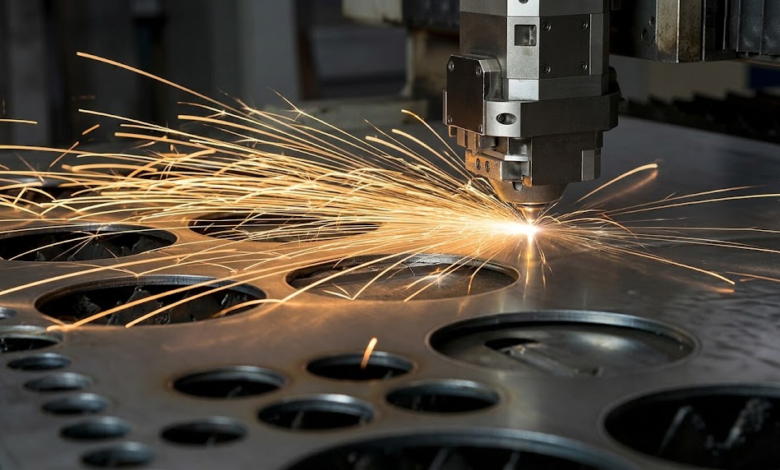
The manufacturing delays may cause problems in the product launch, raise inventory expenses, and delay important engineering decisions. Sheet metal fabrication is a practical solution that can help streamline production times by cutting, forming, and assembling metal sheets into functional parts. But speed is not only a function of the machine. Design readiness, material availability, process selection, and finishing requirements impact delivery. Manufacturers can minimize disruption and more reliably deliver their concept to product – end-to-end – without the need for further iterations when they have a coordinated fabrication strategy.
- Identify the Sources of Manufacturing Delays
Generally, long lead times begin prior to the fabrication equipment being put to work. Bottlenecks can occur at every stage of production because of incomplete drawings, confusing tolerances, and materials that are unavailable or design changes. Undocumented specifications can cause additional communications, quotation changes, and rework in manufacturing.
There could also be a number of cutting, bending, welding, and finishing suppliers integrated into the traditional workflow. Transportation of components between facilities increases transportation time and scheduling difficulties. These delays can be identified early and thus enable engineers to focus their improvements on the entire manufacturing process, and not just the speed of the machine.
- Accelerate Production Through Design Optimization
Design for manufacturability (DFM) is a process to help engineering staff design sheet metal parts that are easily manufactured. The number of unnecessary features, standardized bend angles, and selection of appropriate thicknesses of material can reduce the number of set-up requirements and the complexity of the fabrication process.
There are a number of design factors that affect turnaround time. Appropriate bend radius will reduce the potential for cracking, and appropriate hole/bend spacing will reduce the potential for deformation. The standard sizes of holes and easy-to-reach tooling can also ease production planning.
Getting these things clear before manufacturing minimises questions and costly changes. The suppliers can then analyse the full CAD data and specifications early on, identify potential problems, propose processes, and come up with more realistic production schedules.
- Choose Custom Sheet Metal Fabrication for Faster Turnaround
When choosing a manufacturing partner, the multiple stages of production can be consolidated into one production process. The custom sheet metal fabrication can be useful for quick prototyping, testing, and low-volume manufacturing – eliminating the need for expensive tooling investments.
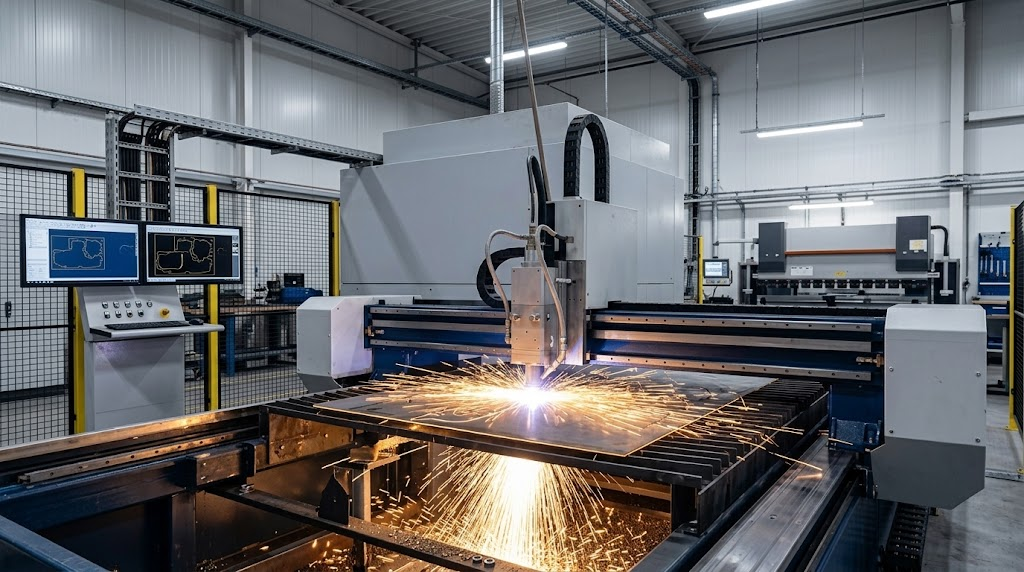
Laser cutting, punching, bending, and welding are processes that can be used to convert sheet stock to useful parts, depending on the geometry of the parts and the quantity of the production run. They’re employed in applications like electronic enclosures, mounting brackets, equipment panels, and structural frames.
A competent supplier can even review design documents and propose viable alternatives that can be manufactured and meet finishing requirements before production begins. 3ERP offers sheet metal fabrication as well as CNC machining, injection molding, vacuum casting, and more. It has a quick manufacturing turnaround, enabling projects to go from design validation to production with reduced supplier handoffs.
- Select Efficient Fabrication Methods for Each Component
The process affects the speed of the process, the accuracy of the dimensions, the type of tooling used, and the finishing work. A suitable selection of a process will avoid unnecessary processes, while ensuring the functional requirements of the component are met.
- Laser cutting: Produces precise profiles and intricate cutouts with minimal material waste in suitable applications. It works particularly well for sheet metal parts requiring complex two-dimensional geometries.
- Punching: Creates repeated holes, slots, and other features efficiently, especially when components contain consistent patterns.
- Bending: Forms flat sheets into brackets, channels, and enclosures using press brakes. Standardized bends can simplify setup and improve repeatability.
- Stamping: Supports rapid, consistent production of repeated shapes, particularly when volumes justify the required tooling.
- Welding and assembly: Join separate components into functional structures. Planning joint locations and assembly sequences early helps avoid unnecessary handling and rework.
Not every component requires every process. Matching manufacturing methods to geometry, material, quantity, and tolerance requirements keeps production practical and reduces avoidable processing stages.
- Improve Material Availability and Finishing Coordination
Material availability can have as much of an effect on the procurement schedule as fabrication. Aluminum, carbon steel, stainless steel, copper and brass can provide varying levels of strength, weight, conductivity, corrosion resistance and price. By selecting the right grade that is available and in stock, delays in purchasing can be avoided.
Early consideration of the finishing requirements is also needed. Additional processing time or external co-ordination may be necessary for powder coating, anodizing, polishing, painting and plating. Assigning these conditions to a required finish, colour and surface condition before production enables suppliers to plan these operations with fabrication.
If performance is not specified, then the use of a suitable standard finish as opposed to a more complicated treatment may ease the scheduling process. Only use material substitutions after determining that the substitute material is acceptable for the engineering and application of the component.
- Streamline Prototyping and Low-Volume Production
Rapid prototyping will allow engineers to test fit and assembly, dimensions, and functional performance before larger quantities of production. Sheet metal prototypes can also help uncover issues that drawings might not identify, such as clearance issues, hard-to-reach fasteners, and unforeseen interference between parts.
Low volume manufacturing is an option if designs need to be tested in small quantities or if there is no certainty of market demand. Small volume production can allow for less investment in large-scale tooling and may provide a chance for design modifications prior to large-scale production.
Projects with no minimum order quantities, prototype and production requirements are supported by 3ERP. Depending on the process and project requirements, its standard simple parts can have a lead time of 3 days. Actual delivery schedules may vary due to availability of materials, complexity, finishing, and inspection.
- Maintain Quality Without Creating Production Bottlenecks
When dimensions are incorrect, a part is rejected, or the entire process must be repeated, fast manufacturing is not as valuable. Quality checks should thus be integrated into the actual fabrication process and not left as the final step.
The inspection of bend angles, critical hole locations, initial cut sizes, and inspection of incoming materials can help to detect problems before subsequent processes increase the cost of correcting these deviations. Drawings should be clear, tolerances should be set, and inspection criteria should be consistent and allow the supplier to determine which dimensions are most critical.
By using an ISO 9001:2015 certified manufacturing partner such as 3ERP, the quality management can be structured. Good inspection planning provides for effective inspection without unnecessary delays and for results that can be relied upon to meet the needs for verification.
- Conclusion
To minimise lead times, co-ordinated decisions between design, procurement of materials, fabrication, finishing and quality control are required. Optimized drawings, suitable manufacturing methods, and efficient production can help avoid many delays, as well as an early review of specifications.
Manufacturers need not only consider speed, but also remove the bottleneck without sacrificing dimensional accuracy and function of the parts. Collaborating with a fabrication partner that has experience in the field also aids engineers in evaluating production needs prior to the start of production.
Sheet metal parts can be manufactured more efficiently, and the process from design to production can be shortened; thus, practical manufacturing strategies and project specifications can be used to help achieve faster product development and timely delivery.