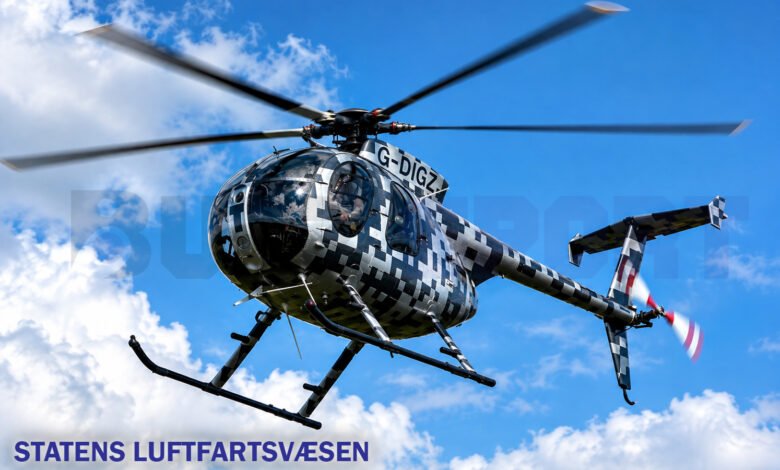
Statens Luftfartsvæsen was the Danish government agency that looked after civil aviation in Denmark until 2010. Many people know it by its short name, SLV. You may have found the name in an old document, a flight rule, or a history book, and now you want to know what it was and if it still exists. This guide gives you clear answers in simple words. You will learn how the agency started, what it was responsible for, why it closed, and which organizations do its work today.
What Does Statens Luftfartsvæsen Mean?
Statens Luftfartsvæsen means “The State Aviation Authority” in English. The name has three parts. “Staten” means the state. “Luftfart” means air travel. “Væsen” is an old Danish word that is often used for a public service or office, like in the word “sundhedsvæsen” (the health service).
In English, most writers call the agency the Civil Aviation Administration of Denmark, or CAA-DK. It was part of the Danish Ministry of Transport, and its head office was in Copenhagen. The agency looked after civil aviation in Denmark, and also in Greenland and the Faroe Islands.
What Did Statens Luftfartsvæsen Do?
The agency’s main job was to help Danish aviation work in a safe, efficient, and low-cost way for passengers, airlines, and society. That is how the Danish national encyclopedia, Lex, describes its purpose.
In daily life, this meant a few big tasks:
- Making safety rules. The agency set the safety standards for flying in Denmark.
- Checking that people followed the rules. It watched over airlines, flying schools, repair workshops, and airfields.
- Running air traffic services. For many years, it guided planes and looked after the technical systems that help them fly safely.
- Running airports. It ran Bornholm Airport and Vágar Airport in the Faroe Islands.
So the agency did two things at the same time. It wrote the rules, and it made sure the rules were used.
How Did Statens Luftfartsvæsen Start?
The agency grew out of a small group of state offices from the 1920s and 1930s. Flying was new, and the state wanted a way to watch over it.
The Danish National Archives (Rigsarkivet) show the early steps. A council for aviation, called Luftfartsrådet, worked from 1926 to 1936. In 1937, the state created a job called Statens Kommitterede i Luftfartssager, which means a state representative for aviation matters. At the same time, two inspectors were named. One checked aircraft and equipment, and one checked flights. Their work was called Luftfartstilsynet, which means aviation supervision. Two officers from the Army flying school and the Navy flying boat station helped as technical advisers.
Lex says the authority was set up on 1 March 1938 as Luftfartsdirektoratet, under the Ministry of Public Works. In 1947, it was called Direktoratet for Statens Luftfartsvæsen. It got the name Statens Luftfartsvæsen in 1985. Some archive records give 1984, so you may see both years.
What Are the Key Dates?
Here is a short timeline that is easy to scan:
- 1926 to 1936: The aviation council Luftfartsrådet works.
- 1937: A state aviation representative and the first flight inspectors are named.
- 1 March 1938: The authority starts as Luftfartsdirektoratet.
- 1947: The name changes to Direktoratet for Statens Luftfartsvæsen.
- 1985: The name Statens Luftfartsvæsen begins.
- 1 January 2001: Air traffic control moves to a new body called Naviair.
- 1 November 2010: The agency merges with Trafikstyrelsen, and the old name ends.
How Was the Agency Organized?
Statens Luftfartsvæsen had two main parts. Lex names them as Luftfartstilsynet and Flyvesikringstjenesten.
Luftfartstilsynet set the safety standards and checked that people followed them. Flyvesikringstjenesten handled air traffic control and other air traffic services. It also built and ran the technical systems that help planes navigate and land.
The archive records show that the structure was wider in earlier years. The agency also had a flight weather service, a flight radio service, and an accounting service. It ran state airports in Aalborg, Odense, Rønne, and Vágar. Copenhagen Airport was part of this group until 1972.
What Were the Rules Called “Bestemmelser for Civil Luftfart”?
Bestemmelser for civil luftfart, or BL, were the written rules that the agency published for Danish aviation. You can think of them as a rule book for the sky.
Flying companies used the BL rules to plan their work. According to Lex, the rules covered many topics:
- Aircraft and aircraft equipment
- Repair workshops
- Airfields and airfield rules
- Flight operations
- Training
- Air routes and safety systems
- Charter and taxi flights
If you see “BL” followed by a number in an old Danish document, this is what it means. Keep in mind that these rules are old. Today’s rules can be different, so always check the current version before you use them.
What Happened to Air Traffic Control?
Air traffic control left the agency on 1 January 2001. On that day, Statens Luftfartsvæsen was split in two. One part stayed as the regulator, and the other became a service provider called Naviair, short for “Navigation via Air.”
This was a smart idea. One body writes and checks the rules. Another body does the daily work of guiding planes. When the same office does both, it can be hard to judge its own work fairly. Splitting them makes each job clearer.
Naviair started as a government agency. In October 2010, it became an independent company that the Danish state owns fully. The Ministry of Transport said the change would make air traffic management in Denmark more independent and prepare it for international cooperation.
Today, Naviair provides area control for Danish airspace and approach control for busy airports. It also runs control towers at places like Copenhagen, Roskilde, Billund, Aarhus, Aalborg, and Bornholm.
Why Did Statens Luftfartsvæsen Close in 2010?
Statens Luftfartsvæsen closed because the government merged it with another agency, Trafikstyrelsen, on 1 November 2010. The new agency kept the name Trafikstyrelsen, and the old name was dropped.
Several sources describe the change as a way to bring more transport work under one roof. Trafikstyrelsen already looked after other areas of transport, so aviation joined a larger team.
The change was not a sudden stop for the work. According to Wikipedia, the former aviation office kept the same tasks and stayed at the same address after the merger. In other words, the name changed first, and the daily work carried on.
Who Runs Danish Aviation Today?
Trafikstyrelsen is now Denmark’s national civil aviation authority. It took over the work that Statens Luftfartsvæsen did as a regulator.
The Ministry of Transport says Trafikstyrelsen has the widest range of tasks among its agencies. It covers roads, motor vehicles, railways, ferries, and civil aviation. For aviation, it is responsible for rules, planning, and supervision.
Lex describes the main aviation task as creating the frame for safe civil aviation. That includes rules and approvals for aviation staff, workshops, and aircraft. It also includes passenger rights. Lex says the whole authority has about 650 employees in 2026.
The English name of the agency has changed over time. You may read “Danish Transport Authority” in older texts. After housing and building tasks moved to a new agency in 2021, Wikipedia says the English name became “Danish Civil Aviation and Railway Authority.” The Danish name, Trafikstyrelsen, stayed the same.
Trafikstyrelsen does not work alone. As a member of the European Union, Denmark follows EU aviation rules, and the agency works with European bodies such as EASA, the European Union Aviation Safety Agency. Naviair, as explained above, handles air traffic control.
Why Does the Old Name Still Appear?
The old name still appears because many papers, licenses, rule books, and history pages were made when the agency was active. Old documents keep the name they were written with.
The Danish National Archives also keep records from the agency. One archive series, called “Lufthavne” (Airports), covers the years 1931 to 1985 and lists Statens Luftfartsvæsen as its creator. Researchers and history fans can search there for old material.
If you need help with a current question, such as a license, an aircraft approval, or passenger rights, go to Trafikstyrelsen. Do not write to the old agency name, because it no longer exists.
Conclusion
Statens Luftfartsvæsen was Denmark’s civil aviation authority for many decades. It set safety rules, checked that people followed them, ran air traffic services for a long time, and managed some state airports. In 2001, air traffic control moved to Naviair. In 2010, the agency joined Trafikstyrelsen, and the old name ended. Its work did not end, though. Trafikstyrelsen now looks after civil aviation rules in Denmark, and Naviair guides the planes.
Frequently Asked Questions
Does Statens Luftfartsvæsen still exist?
No. Statens Luftfartsvæsen stopped existing under that name on 1 November 2010, when it merged with Trafikstyrelsen. The Danish Transport Authority took over its aviation tasks, and the office stayed at the same address at first. Today, Trafikstyrelsen looks after civil aviation rules and supervision in Denmark.
What is the English name of Statens Luftfartsvæsen?
Most writers call it the Civil Aviation Administration of Denmark, or CAA-DK. Some translate the name more directly as the State Aviation Authority. Both names mean the same agency. Its short Danish name was SLV. It belonged to the Danish Ministry of Transport and covered Denmark, Greenland, and the Faroe Islands.
Who controls air traffic in Denmark now?
Naviair does. It is a company that the Danish state owns, and it became separate from Statens Luftfartsvæsen in 2001. Naviair runs area control for Danish airspace and approach and tower services at main airports like Copenhagen. Trafikstyrelsen does not guide planes. It writes and checks the rules.