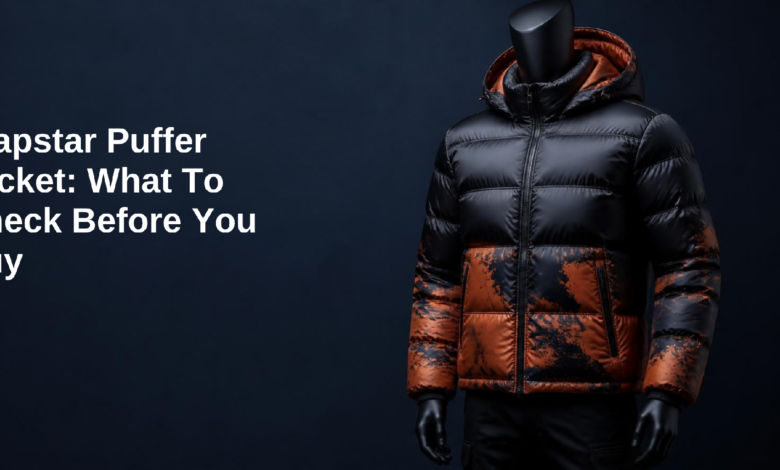
When a trapstar puffer jacket catches your eye, there’s more to think through than just the colourway. The brand runs a tight lineup and each piece has a distinct identity. This guide covers the models, how to nail the fit, the warmth question and how to build an outfit around one. Read it before you commit.
The Models Worth Knowing
Trapstar keeps its puffer range focused rather than cluttered. The two pieces that matter most are the Hyperdrive and the Irongate Arch Puffer.
The Hyperdrive is built for adaptability. It comes with a removable hood, which gives you two distinct looks from a single jacket. The quilting is structured, the silhouette stays clean, and the chenille branding sits on the chest without dominating. If you want outerwear that shifts between casual and slightly sharper depending on the day, this is the stronger starting point.
The Irongate Arch Puffer leans into the brand’s identity much harder. The arch logo runs across the chest in raised chenille — it is the focal point. This is a heavier statement piece, built for when the cold is serious and you want your outer layer to carry the look on its own.
Both models form part of the outerwear selection at Trapstar, alongside the rest of the brand’s current range.
Trapstar Puffer Jacket: Getting the Fit Right
Sizing runs from XS to XXL and sits true to size for most people. If you land squarely in one size, you do not need to second-guess it.
The main variable is layering. If you wear a heavyweight hoodie underneath — which is common through a British winter — consider going up one size. The fit should sit clean across the shoulders regardless of what you have on beneath. A puffer that pulls across the back or bunches at the arms loses the whole silhouette, so a little extra room is better than none.
If you plan to wear lighter layers, your usual size will serve you well.
Hood On or Hood Off
The detachable hood on the Hyperdrive changes the jacket’s versatility more than most people expect. With the hood removed, you get a clean collar line that works naturally with a scarf or a high-neck knit underneath. The neck opening looks intentional rather than bare, which matters when you are going for a considered outfit rather than a wrapped-up one.
Reattach the hood and the whole mood shifts. The structured fill keeps its shape rather than collapsing into something soft and saggy. That is worth noting if you have worn high-street puffers where the hood ends up getting tucked away because it looks flat. On the Hyperdrive it earns its place.
If having a fixed hood is a priority, the Irongate Arch Puffer does not require you to think about it. It is on and it holds its shape.
Warmth and Layering Through Winter
A Trapstar puffer jacket is designed with the British climate in mind — damp, cold and rarely straightforward. The outer shell handles wind well and the quilted fill keeps heat in without making the jacket look inflated.
The smart approach to layering is keeping it proportionate. A base layer and a midweight fleece or hoodie underneath covers most of what October through February will throw at you. Piling on a thick knit beneath a puffer adds bulk without a corresponding gain in warmth, and it distorts the silhouette at the chest and shoulders.
For milder days, a long-sleeve top and the puffer alone is often plenty. It keeps the look clean and the weight manageable.
Puffer vs Shell Suit: Which One?
Both sit under the outerwear category, but they are not interchangeable.
The shell suit is lighter, packs down more easily and handles transitional weather well. It works for autumn walks, drizzly mornings and days when a proper puffer would be too much. It layers easily without adding visual bulk.
The puffer is the cold-weather choice. Below 10°C, the insulated fill makes a real and noticeable difference. It carries more weight as an outfit piece and looks more substantial when you need your outerwear to do the heavy lifting.
If you are only buying one, think about the months you will actually wear it. Late autumn to late winter means the puffer wins clearly. If you spend more time in milder conditions and want something to grab before heading out, the shell suit covers you better.
You can see both side by side on the Giubbotto Trapstar page, which shows the current models and makes the choice easier.
How to Style a Trapstar Puffer
Keep the rest of the outfit grounded. Straight-leg trousers or coordinating tracksuit bottoms both work well with the puffer’s silhouette. Chunky trainers balance the visual weight without competing with the chest branding.
If you are wearing the Irongate Arch version, let it lead. Avoid stacking logos elsewhere in the outfit. Keep the base layers and bottoms in solid, neutral tones so the puffer takes its place without the whole look becoming too busy.
For a sharper take, pair the puffer with tailored trousers and clean low-top trainers. Trapstar’s construction holds up in smart-casual settings when everything else in the outfit is disciplined and pulled back.
The trapstar puffer jacket rewards a straightforward approach. Know which model suits your routine, sort the fit before you order, and keep the styling clean. It is a considered piece of outerwear — treat it like one and it will hold up well through any British winter.