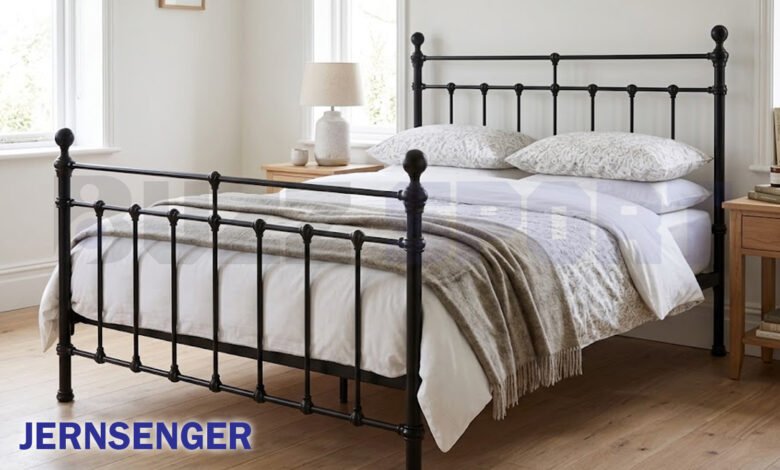
You may have typed “jernsenger” into Google and found very different answers. One page talks about furniture. Another talks about work tools or online communication. So what is the real meaning?
The short answer is simple. Jernsenger is a Scandinavian word, and it means iron beds. In this guide, we will look at where the word comes from, how iron beds became popular, what styles you can find today, and how to pick and look after one. We will keep everything easy, so you can read it quickly and use the tips in real life.
What Does Jernsenger Mean?
Jernsenger is the plural form of the Norwegian word jernseng, which means “iron bed.” The word has two parts. “Jern” means iron, and “senger” means beds. Put them together and you get “iron beds.”
The word is not common in English. But the thing it describes is very well known. An iron bed is a bed frame made mostly from metal, usually steel or cast iron. People have used this kind of bed since the nineteenth century, and it is still a favorite in both old-style and modern homes.
So if you see “jernsenger” in a shop, a book, or a travel blog from Norway or Denmark, you can read it as “iron beds” or “metal beds.”
A Short History of Iron Beds
From wood to metal
For a long time, most beds were made of wood. Many were big, dark four-poster beds. In the early 1800s, metal started to take over. Metal bed frames became popular in England and then in the United States. One reason was cleanliness. Wooden frames were known to collect dust and pests such as bed bugs, while a smooth metal frame was easier to keep clean. Makers and sellers often point to this as the main reason people changed to iron.
Metal bedsteads were first made in large numbers in England in the 1840s. At the Great Exhibition in London in 1851, metal beds got a lot of public attention. Some of the fancy beds shown there had detailed scrolls, leaves, and even small figures in the metalwork.
The Victorian boom
The Victorian era was the golden age of the iron bed. Makers used the strength and shape of iron to build tall headboards and footboards with curls, flowers, and fine details. Early frames were made by hand. Workers poured hot iron into molds, then polished each piece. This hand-made way of working continued until around World War I.
Production was at its highest from about the 1880s to the 1920s. In the United States, companies began to produce iron beds on a big scale during the 1880s, and the beds became a normal part of many homes.
Not every iron bed was fancy. Beds made for servants or for people with less money often had a simple cast iron top rail and end rail, with a few brass rods and brass tips on the posts.
The later years
Styles changed with the times. Around 1900, the Art Nouveau style brought soft, curved top rails that ended in flower shapes. In the 1920s and 1930s, the beds became simpler and more geometric, often with square tubes and very little decoration. After World War I, machines and mass production changed how beds were made, and the hand-made era slowly faded.
Today, iron beds are back in fashion. You can buy new ones, or you can look for an old one at a market or an antique shop.
Why are old iron beds so high?
If you have seen an old iron bed, you may have noticed that it sits quite high off the floor. One furniture seller explains that Victorian houses had no central heating, so the air near the floor was cold. A high bed kept sleepers away from the draft.
The Main Parts of an Iron Bed
An iron bed is easy to understand. Most frames have five basic parts:
- a headboard
- side rails
- an end rail or footboard
- legs
- a support for the mattress
The open design is one of the best things about an iron bed. The headboard is often made of bars or curves, so you can still see the wall behind it. That makes a room feel lighter than a big, solid wooden or padded headboard does.
Cast Iron, Wrought Iron, and Steel: What Is the Difference?
Shops often use the words “iron bed,” “metal bed,” and “wrought iron bed” as if they mean the same thing. They do not. Knowing the difference helps you avoid paying too much.
Cast iron is made by pouring hot, liquid iron into a mold. This makes it possible to create detailed shapes. Cast iron is very hard, but it is also brittle. It does not bend much, and it can break if it is hit hard.
Wrought iron is shaped by heating the metal and hammering it. The word “wrought” is an old English word that means “worked.” Wrought iron has less carbon than cast iron, so it can bend a little under pressure instead of breaking. Many makers prefer it for modern bed frames because it is strong and quiet.
Steel tube or bar is what most “iron” beds are made of today. These frames are lighter and cheaper. They are often painted black or bronze and shaped with curls and tips so they look like old Victorian beds.
One retailer guide gives a useful example. A real hand-forged wrought iron frame can weigh around 60 kilograms, while a steel frame with an iron look might weigh about 25 kilograms and cost much less. Prices change from country to country, but the weight difference is a good clue. A real antique cast iron double bed can weigh well over 100 pounds.
Neither type is always the best. Wrought iron is a good choice if you want a strong frame for everyday sleep. Steel is a good choice if you want a light bed and a smaller bill. Cast iron suits people who care most about old-style looks.
Common Iron Bed Styles
Iron beds come in many looks, but a few styles appear again and again.
Victorian style. Think of curved rails, arches, scrolls, and decorative castings. Many Victorian beds were painted white or ivory, and some had brass details to look richer.
Edwardian style. These beds are often more delicate. The casting is lighter and the design is less heavy than in the Victorian period.
Art Nouveau. Look for flowing lines and plant or flower shapes.
Art Deco. This style uses clean, geometric shapes. It started to appear in the 1920s.
Modern iron beds. New frames usually have straight lines, simple shapes, and very little decoration. They fit well in modern bedrooms.
Iron four-poster beds. These give you the grand look of a four-poster bed, but the thin metal frame feels lighter than a heavy wooden one. They can work in small and large rooms.
Old-style iron beds look great with natural materials, patterned fabrics, and traditional furniture. Modern iron beds go well with plain walls, simple bedding, and a few plants.
Why People Like Iron Beds
Here are the main reasons people choose an iron bed.
- It lasts a long time. A good iron bed can last for decades. Some families pass them from one generation to the next.
- It is easy to keep clean. There are no soft parts to hold dust, and you can wipe the frame with a cloth.
- It saves space visually. The open design lets you see through the frame, which helps small rooms feel bigger.
- It fits many styles. You can use one in a farmhouse bedroom, a city flat, or a modern home.
- It can be recycled. Metal can be recycled, which is a plus if you want to think about the environment.
Things to Watch Out For
Iron beds are not perfect. Before you buy, keep these points in mind.
Noise. Metal joints can squeak, especially after a few months of use. In many cases, tightening the bolts fixes the problem. Frames with fewer joints are usually quieter.
Weight. Real iron is heavy. If you move house often, a lighter steel frame may be easier to live with.
Rust. Iron can rust if it stays wet for a long time. This is rare in a dry bedroom with a good finish, but it can happen in a damp place or during storage.
Wrong labels. Many beds sold as “wrought iron” are actually steel tube or a mix of metals. Ask the seller what the frame is made of.
Mattress support. A metal frame needs good slats or a solid base. Check the slat spacing and compare it with the advice from your mattress maker. A mattress on a poor base can wear out faster.
How to Choose the Right Iron Bed
Use this simple checklist when you shop.
- Measure your room and your mattress. Check the mattress size first. Then check how much floor space the frame needs. Also look at the height of the headboard and the footboard.
- Ask what the bed is made of. Cast iron, wrought iron, and steel are very different in price, weight, and strength.
- Look at the joints. Strong welds and thick bolts are signs of good quality. Thin, loose joints often become noisy.
- Check the finish. A smooth, even coat of paint or powder coating protects the metal from rust.
- Look at the support system. Make sure there are enough slats, and ask if the bed needs a center leg for bigger sizes.
- Think about your style. A tall, curvy headboard feels traditional. Straight bars feel modern.
- Set a budget. Hand-made frames cost more. Steel frames cost less. Decide what matters most to you.
If you want an antique, check the weight and the details. Hand-poured frames from the Victorian era feel heavy and a little rough. Look for signs of damage, such as cracks near the joints, because cast iron can break rather than bend. A bed with chipped paint and some rust may still be a good project, since the old finish can often be removed and replaced.
How to Clean and Care for an Iron Bed
Iron beds need very little care, but a few easy habits will help them last.
Everyday cleaning
- Dust the frame with a soft dry cloth every week or two.
- Once a month, wipe it with a damp cloth and a little mild soap.
- Dry the frame fully with a clean cloth. Water that stays on the metal can lead to rust.
- Use a soft toothbrush for small corners and curves.
If you find rust
- Brush off loose rust with a wire brush. Wear gloves, goggles, and a dust mask.
- For light rust, put white vinegar or lemon juice on the spot. Wait about ten minutes, then wipe it off.
- For harder rust, rub gently with fine sandpaper or steel wool.
- Try any method on a small, hidden spot first.
- Dry the bed completely when you finish.
Protect the metal
- Put on a thin layer of wax, or use a clear rust-stopping spray or paint made for metal.
- If you want a new color, clean the bed, add a metal primer, and then paint.
- Keep the bed in a dry room. If you need to store it, choose a dry place and avoid damp garages.
- Do not use linseed oil on old iron. It can turn into a hard coating that is very hard to remove.
Is Jernsenger Also a Tech Word?
You may have found websites that describe jernsenger as a work method, a digital idea, a blog platform, or a “rising keyword.” These pages do not agree with each other. Some say it is a framework for modern work. Others say it is about online communication. One page even says it is only an SEO keyword with little information online. When people look at the language roots, though, the meaning is clear: Norwegian and Danish for iron beds. If a page does not mention beds at all, it is wise to double-check the source before you trust it.
Final Thoughts
Jernsenger may look like a strange word at first, but the idea behind it is simple: iron beds. They have a long history, from the English workshops of the 1840s to the grand Victorian frames and the clean, simple designs we see today. If you like a bed that lasts, looks good, and does not need much care, an iron bed is a smart choice. Just check what it is made of, test the support, and keep it dry. Do that, and your bed can serve you for many years.
Frequently Asked Questions
What does jernsenger mean in English?
Jernsenger means “iron beds.” It is the plural of the Norwegian word jernseng, which means “iron bed.” The word is made from “jern” (iron) and “senger” (beds). It is not a common English word, but people use it online when they talk about metal bed frames, especially in a Scandinavian style.
Are iron beds comfortable to sleep on?
Yes, they can be. The comfort mostly comes from your mattress, not the frame. The frame’s job is to give your mattress firm and even support. So the most important thing is a good slat system or base that fits your mattress, plus tight bolts so the bed stays quiet. If the support is weak, the bed can feel uneven or noisy.
How do I stop my iron bed from rusting?
Keep it dry, dust it often, and wipe up any spills right away. Dry the frame fully after you clean it. Add a thin coat of wax or a clear rust-stopping spray to protect the metal. If you see a small rust spot, remove it early with vinegar or lemon juice and a little gentle scrubbing. In a dry bedroom, a well-finished iron bed rarely has trouble.