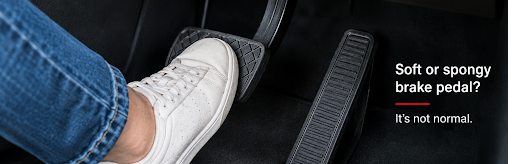
A soft brake pedal is never a minor inconvenience. Here are the real causes of a spongy brake pedal, what each one means, and what to do about it.
There is a particular sensation that no driver should ever have to get used to. You press the brake pedal and instead of the firm, immediate resistance you expect, it feels soft, springy, or slightly mushy underfoot. It might sink further toward the floor than usual before the brakes engage. It might feel almost normal on a gentle press but turn spongy under firmer pressure. However a soft brake pedal presents itself, one thing is consistent: it is not normal, and it should never be treated as something to monitor and hope resolves on its own.
A soft brake pedal is almost always a hydraulic problem. The braking system works by converting pedal force into hydraulic pressure that is transmitted through brake fluid to the calipers at each wheel. That process depends entirely on the fluid being incompressible. The moment anything compressible, whether air, water vapour, or a failing component, enters that closed hydraulic circuit, the pedal loses its firmness, and the system loses its ability to build full braking pressure. The car may still stop, but it will not stop as well as it should, and in an emergency, that difference is significant.
Drivers in and around Aldershot, Fleet, and Farnborough who have noticed their brake pedal feeling different to how it used to should have it checked at Ash Road Service Centre’s brake service promptly. A brake system fault is not something to leave for the next available slot. This guide explains the most common causes of a soft or spongy brake pedal, how to recognise each one, and what needs to happen to restore the system to safe working order.
What a Healthy Brake Pedal Should Feel Like
Before working through the causes, it helps to have a clear reference point for what the pedal should feel like when the braking system is working correctly.
A healthy brake pedal should be firm and progressive from the moment you begin pressing it. There should be a small amount of free travel at the very top of the pedal stroke, perhaps an inch or so, before resistance builds. From that point, the pedal should feel solid and consistent, with braking force increasing proportionally as you press harder. Under sustained pressure at a standstill, the pedal should hold its position without slowly sinking toward the floor.
Any deviation from this description is worth investigating. A pedal that feels springy or compressible, that sinks slowly under constant pressure, that requires pumping to achieve normal firmness, or that sits noticeably lower than it used to before the brakes engage is communicating a fault that needs professional attention.
How the Hydraulic Brake System Works
Understanding why a soft pedal matters starts with understanding what the system is supposed to do.
When you press the brake pedal, the brake servo (a booster that uses engine vacuum or an electric pump) multiplies the force from your foot. The master cylinder then turns that force into hydraulic pressure. Brake fluid carries this pressure through the steel brake lines and flexible hoses to the caliper at each wheel. The caliper pistons push the brake pads against the brake disc, and the friction slows the car. Every link in that chain relies on the fluid passing on pressure without being squeezed.
When something compressible enters the hydraulic side of that chain, the pedal force goes into compressing that substance rather than immediately pushing brake pads against the disc. The result is a pedal that travels further before the brakes bite, feels springy underfoot, or in serious cases sinks all the way to the floor.
The Most Common Causes of a Soft or Spongy Brake Pedal
1. Air in the Brake Lines
Air in the brake lines is the most common cause of a soft brake pedal. Unlike brake fluid, which is essentially incompressible, air compresses readily under pressure. When air is present in the hydraulic circuit, pressing the pedal compresses the air rather than immediately transmitting force to the calipers. The result is that spongy, springy feeling as the pedal travels further than it should before braking begins.
The most useful diagnostic test for air in the lines is the pump-to-firm test. With the engine running, press the brake pedal and hold it. If it feels soft, release it fully and pump it several times in quick succession. If the pedal firms up significantly after pumping but returns to feeling soft again after sitting under steady pressure, air in the hydraulic circuit is the most likely cause.
Air most commonly enters the brake system after any brake work where a caliper, hose, or line has been opened and not properly bled afterward. It can also enter following a significant fluid loss event, or in some cases through a deteriorating rubber brake hose that allows air to permeate inward under pressure.
The fix is a brake bleed, a process where fresh fluid is pushed through the entire system to purge any trapped air. On vehicles with ABS, this process requires specialist equipment to cycle the ABS modulator and release any air trapped within it, which a basic bleed without the right tools will not reach.
2. A Brake Fluid Leak
The rigid brake lines under most cars are made from steel tubing, and the salt spread on UK roads in winter speeds up rust on them. Over time, corrosion can eat a small hole through the wall of a line and let brake fluid escape. Less fluid in the system means less hydraulic pressure, so the brake pedal feels soft or sits lower than normal.
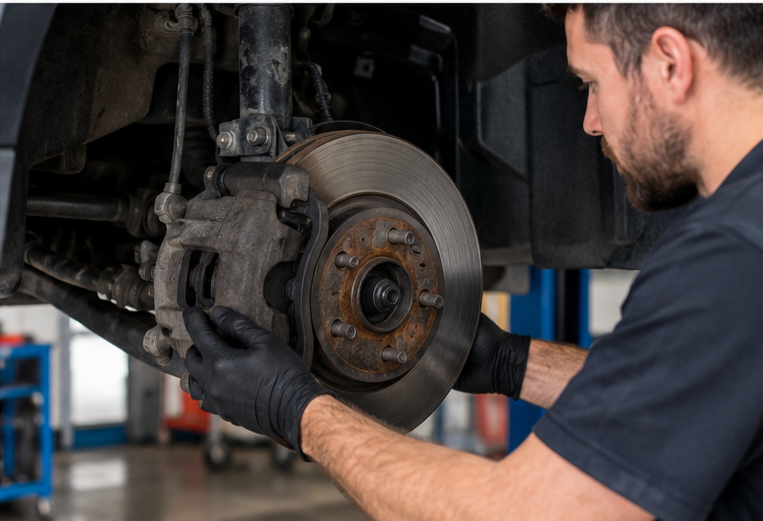
A leak anywhere in the braking system, whether from a corroded steel line, a deteriorating flexible rubber hose, a leaking caliper seal, or a faulty wheel cylinder on a drum-braked axle, reduces the volume of fluid available to maintain hydraulic pressure. As fluid escapes, air takes its place in the system.
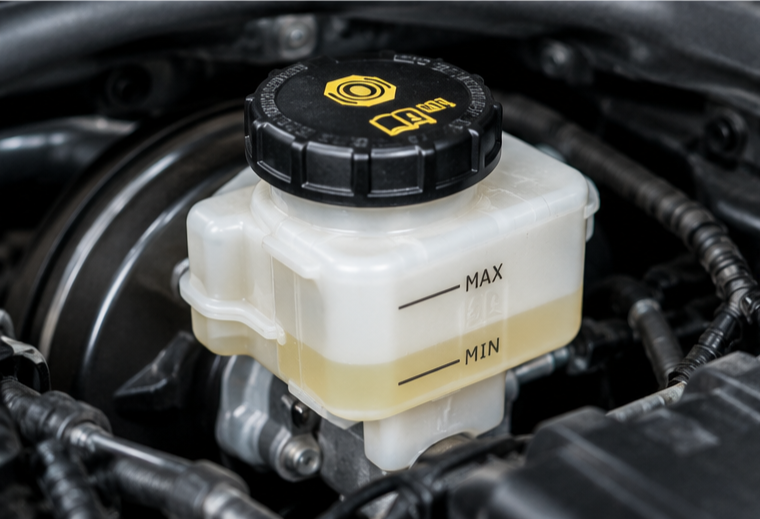
The clearest signs of a brake fluid leak include a brake warning light illuminating on the dashboard, a fluid reservoir that needs topping up more frequently than normal, or in more significant cases, a visible wet patch or staining near a wheel, under the car, or around the brake master cylinder under the bonnet. Brake fluid is typically clear to light yellow in colour when fresh, darkening with age.
A brake fluid leak is an urgent fault. A leak that starts small can worsen rapidly, and any scenario where the fluid level drops to the point where the brake circuit ingests air creates a potential for sudden, significant loss of braking ability. The vehicle should not be driven until the leak source is identified and repaired.
| Leak Location | How to Identify It | Urgency |
| Brake line corrosion hole | Wet or stained underside of car near line routing | Urgent, do not drive |
| Flexible brake hose failure | Wetness near wheel, possible swelling on hose | Urgent, do not drive |
| Caliper seal failure | Fluid wet behind wheel, uneven braking | Urgent |
| Wheel cylinder (drum brake) | Fluid inside drum, wet shoe lining | Urgent |
| Master cylinder seal | Fluid under bonnet near reservoir, fluid loss without visible wheel leak | Urgent |
3. Old or Moisture-Contaminated Brake Fluid
Brake fluid is hygroscopic, meaning it naturally absorbs moisture from the air over time, even in a sealed system.
Fresh brake fluid has a high boiling point by design, allowing it to withstand the significant heat generated during repeated hard braking. As moisture accumulates, that boiling point falls. Under heavy or sustained braking, such as a long descent or repeated hard stops in traffic, fluid that has absorbed significant moisture can reach boiling point inside the caliper. When it boils, it generates vapour. Vapour compresses, which leads to fade and a soft pedal. This condition is sometimes called vapour lock and can cause a previously firm pedal to suddenly feel extremely soft or go to the floor during a period of heavy braking.
Even without reaching boiling point, water in the fluid causes harm. It speeds up corrosion inside the calipers, the master cylinder and the steel lines. Corroded internal components, degraded seals, and contaminated fluid all contribute to a system that performs worse than it should.
Dark brown or black fluid signals contamination. Fresh fluid is clear to pale yellow. Fluid that has turned noticeably dark, cloudy, or milky has absorbed moisture and should be flushed and replaced. Most manufacturers and brake specialists recommend a full brake fluid change every two years regardless of apparent condition, precisely because contamination is not always visible until it is already significant.
4. A Failing Master Cylinder
The master cylinder is the central hydraulic component of the braking system. It converts the mechanical force of your foot pressing the pedal into hydraulic pressure that is transmitted to the calipers at each wheel. Inside the master cylinder, a piston is pushed through a sealed cylinder to pressurise the fluid. When the seals around this piston wear or fail, fluid bypasses them internally rather than being pressurised and transmitted to the brakes.
The classic master cylinder failure symptom is a pedal that slowly sinks to the floor under steady pressure. Unlike air in the lines, which can often be temporarily improved by pumping, a master cylinder with bypassing internal seals will continue to sink regardless of pumping. The fluid is not going anywhere visible externally. The reservoir level may appear normal. But the seals are allowing fluid to move past them internally rather than holding pressure.
A marginal master cylinder seal can go from a pedal that sinks slowly to no hydraulic pressure faster than you would expect. This is a fault that should be treated seriously and addressed promptly rather than monitored over several weeks.
5. Deteriorating Flexible Brake Hoses
Each wheel’s braking circuit includes a short section of flexible rubber hose that bridges the gap between the rigid steel brake line fixed to the chassis and the caliper on the wheel, which moves with the suspension. This flexibility is essential because the wheel moves up and down with the suspension and left and right with the steering. The rubber hose accommodates that movement.
Over time, the rubber in these hoses can deteriorate from the inside out. The internal lining breaks down and the hose structure becomes less rigid under pressure. Rather than transmitting pedal force efficiently to the caliper, a degraded hose swells slightly when pressure is applied, absorbing some of the hydraulic force that should be going to the brake pads. The driver experiences this as a soft or delayed pedal feel, even when the fluid level is correct and there is no external leak.
In some cases, a deteriorating hose develops an internal flap of material that acts as a one-way valve, allowing pressure to build at the caliper but preventing it from releasing fully when the pedal is released. This can cause a caliper to remain partially applied, generating heat and uneven brake wear, and is one of the less obvious but more consequential modes of brake hose failure.
Brake hoses have no defined replacement interval in most manufacturer schedules, but they are inspected during an MOT and during a thorough service. Any hose showing swelling, cracking, surface perishing, or stiffness should be replaced. A full set typically costs less than the diagnosis time saved by replacing them together rather than sequentially.
6. Worn Brake Pads or Poorly Adjusted Rear Brakes
Severely worn brake pads increase the distance the caliper pistons must travel before the pad contacts the disc surface. This extra travel is felt as increased pedal depression before the brakes begin to engage, which can be perceived as the pedal feeling lower or softer than normal.
On vehicles with rear drum brakes, the drum-and-shoe mechanism relies on correct adjustment to maintain an appropriate gap between the shoe and the drum surface. If the automatic adjuster is not functioning correctly, or if the brakes have been recently serviced and not properly adjusted, the rear brakes require excessive pedal travel before engaging. Since the front and rear brake circuits share the same pedal input, a rear brake that requires much more travel than designed will affect the overall pedal feel, contributing to a soft or long-travel pedal.
This cause is less urgent than a fluid leak or failing master cylinder, but it should not be ignored. Severely worn brake pads that have reached the metal backing plate will damage discs rapidly and create a metal-on-metal grinding that escalates into a far more expensive repair.
7. ABS Modulator Issues
On vehicles with ABS, the anti-lock braking system modulator sits within the hydraulic circuit and can trap small amounts of air within its internal chambers. A standard brake bleed that pushes fluid through the wheel circuits without specifically cycling the ABS modulator may leave air trapped in the unit even after an otherwise thorough bleed.
This is why a soft pedal that persists after a recent brake service, where everything else appears to have been correctly done, often points to trapped air in the ABS modulator. Resolving it requires specialist diagnostic equipment that can activate the ABS solenoids in sequence to release the trapped air.
How to Tell the Causes Apart
The pattern of how the pedal feels, and under what conditions it feels that way, is the most useful diagnostic information before the car goes on a ramp.
| Pedal Behaviour | Most Likely Cause | Action |
| Spongy, firms up when pumped | Air in brake lines | Brake bleed required |
| Slowly sinks to floor under steady hold | Failing master cylinder seals | Master cylinder inspection and likely replacement |
| Soft with fluid loss or wet spots visible | Brake fluid leak | Identify and repair leak immediately |
| Soft after heavy braking, improves when cool | Vapour lock from moisture-contaminated fluid | Brake fluid flush required |
| Soft with pulling to one side | Caliper seal failure or uneven hydraulic pressure | Caliper inspection and repair |
| Soft and sits low after new pads or a brake job | Air left in the system or the ABS modulator | Full bleed, using diagnostic equipment on ABS cars |
The pedal behaviour is your clearest pre-inspection clue. Match what you feel to the patterns in the table and communicate it clearly to a technician when you book in.
Is It Safe to Drive with a Soft Brake Pedal?
The direct answer is no. A soft brake pedal means the hydraulic system is compromised and the vehicle’s stopping power is reduced or unpredictable. GOV.UK states that drivers are responsible for making sure their vehicle is always safe to drive, and that a vehicle can be unsafe even if it has a current MOT certificate. A braking fault that impairs stopping performance is not simply an MOT concern. It is a legal and safety matter that applies on every journey.
The specific risk level depends on the cause and how far the fault has progressed. A pedal with mild air contamination may still provide adequate braking under normal conditions but will feel noticeably less reassuring and will perform less well in an emergency stop. A pedal affected by a leaking master cylinder or a significant fluid loss may have very little remaining braking ability, with the pedal potentially going to the floor under firm pressure.
In any scenario where the brake pedal is behaving noticeably differently to normal, the car should be driven only as far as absolutely necessary to reach a place of safety or a professional garage. If the pedal travel is significantly increased or the pedal is going to the floor, the vehicle should not be driven at all.
Soft Brake Pedal and the MOT
A soft brake pedal will almost certainly result in a failed MOT. A brake warning light that shows a fault in the braking system is listed as a major defect in the MOT, which means an automatic fail. Beyond the warning light, the MOT includes a roller brake test that measures the actual braking efficiency achieved at each wheel. A hydraulic system that cannot build full pressure will produce low and likely uneven efficiency readings across the axle, which is a major defect.
Brake fluid condition is also assessed as part of the braking section of the MOT inspection. A system with significantly moisture-contaminated fluid, visible leaks, or components in poor condition will be flagged regardless of how the pedal happens to feel on the test day.
If your MOT is approaching and the brake pedal has been feeling soft, the fault should be investigated and resolved before the test date rather than presented to a tester and discovered through a failure.
Booking an MOT in Aldershot alongside a pre-test brake inspection gives technicians the opportunity to identify the specific cause of any pedal fault and resolve it before the test.
Brake Fluid: The Most Overlooked Maintenance Item
Of all the causes of a soft brake pedal, moisture-contaminated brake fluid is the most preventable and the most commonly overlooked. Most drivers check their oil, their tyre pressures, and their coolant level periodically. Very few check their brake fluid condition or know when it was last changed.
Brake fluid should be changed every two years as a standard interval on most vehicles, regardless of mileage or how the pedal feels. This interval exists because the hygroscopic nature of brake fluid means it accumulates moisture through normal use in ways that are not outwardly visible. By the time the fluid looks dark or the pedal begins to feel soft, the contamination has been building for some time.
A brake fluid change is a straightforward, relatively inexpensive procedure that is typically included as part of a major service. On many vehicles it is also available as a standalone service item. Keeping to this interval prevents the progressive deterioration of boiling point that leads to vapour lock under heavy braking and reduces the corrosive effect of moisture on caliper seals, master cylinder seals, and steel brake lines.
What to Expect from a Professional Brake Inspection
When a car is presented with a soft brake pedal complaint, a qualified technician will work through a structured assessment rather than replacing parts on the most likely guess.
- They will check the brake fluid reservoir level and note whether it is low, and if so, by how much and over what timeframe.
- They will inspect the fluid colour and condition, testing for moisture content where possible.
- They will carry out the pump-to-firm test and the sustained-hold test to determine whether the pedal firms with pumping or sinks under steady pressure.
- They will visually inspect each wheel for signs of fluid leakage, including behind the wheels where caliper seal failures or wheel cylinder leaks are visible.
- They will check all accessible brake hoses for swelling, cracking, or perishing.
- They will assess whether the master cylinder is leaking externally around its body or reservoir.
- Where ABS is present, they will use diagnostic equipment to check for modulator-related fault codes.
This process identifies the specific cause and allows a targeted repair rather than a broad replacement of components that may be functioning correctly. It also confirms whether the repair is straightforward, such as a bleed and fluid change, or whether a component such as the master cylinder, a hose, or a caliper needs replacement.
A soft pedal is easier and cheaper to fix when you catch it early. Ash Road Service Centre in Aldershot is rated 4.6 out of 5 from 343 Google reviews. You can find Ash Road Service Centre on Google Maps or call 01252 342086 to book a brake check.
Conclusion
A soft brake pedal is one of the clearest warning signs a car can produce that its most critical safety system is not working as it should. The hydraulic braking system depends entirely on pressure being built and held reliably every time the pedal is pressed. Any compromise to that process, whether through air, moisture, a leak, or a failing component, reduces the system’s ability to stop the car quickly and predictably.
The causes covered in this guide follow a clear pattern. Air in the lines produces a spongy pedal that firms with pumping. A failing master cylinder produces a pedal that sinks slowly under sustained pressure. A leak produces a pedal that worsens as fluid is lost. Contaminated fluid produces fade under heavy use. Each cause has a specific resolution, and in every case, that resolution is more straightforward and less costly when the fault is addressed early rather than left to develop.
If your brake pedal has started to feel different, act on it today. A braking fault does not resolve itself, and the risk of continuing to drive on a compromised system is not one that any driver should accept when the alternative is a professional inspection and a properly functioning brake system.
Frequently Asked Questions
What does a spongy brake pedal mean?
A spongy brake pedal means something compressible is present in the braking system’s hydraulic circuit. Brake fluid does not compress, so a healthy pedal is firm and progressive. A spongy feel indicates that air, water vapour, or a deteriorating component is preventing the system from building full hydraulic pressure. The most common cause is air in the brake lines, followed by moisture-contaminated fluid and a failing master cylinder.
Can I drive with a soft brake pedal?
In most cases, no. A soft brake pedal means the hydraulic system is not building full pressure, which reduces the car’s stopping ability. In an emergency stop, a compromised braking system may not perform adequately. The vehicle should be driven only as far as necessary to reach a garage, and if the pedal is going close to the floor, it should not be driven at all.
Why does my brake pedal firm up when I pump it?
A pedal that improves when pumped but returns to feeling soft under steady pressure almost always indicates air trapped in the hydraulic system. Pumping the pedal compresses the air momentarily, building temporary pressure, but the air then re-expands when pedal pressure is maintained. A brake bleed to remove the trapped air resolves this.
How often should brake fluid be changed?
Most manufacturers and brake specialists recommend a full brake fluid flush every two years. Brake fluid absorbs moisture continuously through normal use, lowering its boiling point and increasing its corrosive effect on system components. A two-year interval prevents the accumulation of moisture reaching the point where it affects braking performance or contributes to a soft pedal.
Will a soft brake pedal fail an MOT?
Yes, in most cases. A braking system that cannot build full hydraulic pressure will produce low efficiency readings on the roller brake test, which is a major defect. A brake warning light, visible fluid leaks, or contaminated fluid are also assessed during the MOT inspection. Any known brake fault should be resolved before test day.
Why did my brake pedal go soft after a brake service?
A soft pedal following recent brake work almost always indicates that the system was not fully bled after the work was completed. Any time a caliper, hose, or line is opened, air enters the system and must be purged by bleeding the brakes. On vehicles with ABS, a standard bleed may not reach air trapped in the ABS modulator without specialist equipment. Returning to the workshop to complete a proper bleed resolves the issue in most cases.