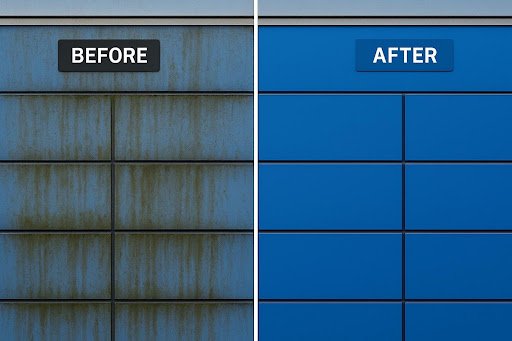
Regular cladding cleaning matters for London properties because it helps protect the building structure, preserve exterior finishes, and maintain property value against the city’s harsh environmental conditions. It is more than an appearance service. Routine exterior cleaning removes harmful chemical deposits and areas that hold moisture, making it easier for building managers to find defects in the building envelope before they lead to expensive repairs.
London buildings face constant traffic fumes, crowded urban conditions, and changing British weather. Without regular care, building exteriors can quickly change from clean architectural features into worn and costly assets. Proactive cladding cleaning in London helps commercial buildings, residential blocks, and industrial sites remain safe, compliant, and presentable throughout their working life.
How London Pollution, Traffic and Weather Affect Exterior Cladding
Although London’s historic smog problems have changed over time, modern pollution still creates a serious risk for building exteriors. Nitrogen dioxide from roads and fine airborne particles, known as PM₂.₅, come from heavy traffic and construction work across the city. These particles create greasy carbon deposits. Instead of simply washing away with rain, they stick to exterior coatings and form stubborn, acidic films on modern facades.
London’s damp, mild climate adds to the problem. Driving rain pushes urban soot into porous surfaces, small cracks, and panel joints. Changes from wet weather to sudden cold periods create repeated expansion and contraction. This allows moisture to move further into exterior layers and speeds up damage to clear protective coats, factory powder coatings, and decorative panels.
What dirt, algae, moss and bird deposits can do to cladding
When airborne dirt settles on building elevations, it creates a suitable surface for biological growth. Green and red algae, lichen, and moss grow well on shaded facades that hold moisture, especially on north- and west-facing elevations. These organisms act like sponges. They keep moisture against the panels, swell inside joints, and slowly open protective seams or damage waterproof gaskets.
Bird droppings can cause similar damage. They contain strong uric acid that can mark or eat through factory lacquers, anodized protective layers, and painted finishes within a short period. If they remain on the surface, the damage goes beyond simple staining. Organic matter and acidic waste can corrode metal supports, damage timber panels, and allow water to pass behind the rainscreen barrier.
How clean cladding supports property value and first impressions
A building’s exterior is its main visual identity. It shapes the opinions of tenants, clients, surveyors, investors, and members of the public. A stained, streaked, or algae-covered facade can suggest poor building management and delayed repairs. In competitive London boroughs, this may affect lease prices and make it harder to keep tenants.
Clean cladding helps preserve the building’s original design and gives investors greater confidence during valuations and condition surveys. Keeping facades free from visible dirt and stains can prevent concerns during a sale or lease agreement. It also presents a professional image for the business or organisation using the property.
What Are the Main Benefits of Routine Cladding Cleaning?
A planned facade cleaning programme supports both the financial and physical condition of a building. Cleaning should not be treated as an emergency job carried out only after stains become noticeable. Regular work protects the money already invested in the building envelope.
Planned removal of pollutants reduces physical damage and helps property owners meet the maintenance requirements set by warranty providers, insurers, and professional investors across the UK property sector.
Prevents staining, corrosion and material deterioration
Regular washing removes harmful substances before they can stick to or damage external surfaces. Pollutants left under strong summer sunlight can cause chemical reactions that break down polymer coatings, fade colours, and wear away anodized protection. Once these surface layers fail, the material below is exposed to oxygen and water.
On metal systems, this can start oxidation and galvanic corrosion. On masonry and porous composite materials, it can cause salt crystals to form below the surface and lead to spalling. Regular removal of these pollutants slows the chemical damage before serious and permanent material failure begins.
Protects warranties and extends cladding service life
Most cladding manufacturers, including those that supply aluminium composite panels, high-pressure laminates, and specialist metal rainscreens, set out maintenance requirements in their warranties. If scheduled cleaning is not recorded or approved cleaning methods are not used, a warranty claim may be rejected if a coating blisters, becomes chalky, or separates too early.
Following the stated cleaning schedule creates a clear maintenance record and supports the technical conditions of the warranty. It can also add many years to the useful life of the facade. Keeping factory coatings in good condition delays the disruption, waste, and carbon emissions linked to early replacement of the building envelope.
Reduces long-term repair and replacement costs
There is a large cost difference between planned surface cleaning and major facade repairs. If stains sink into materials over several years, a simple cleaning task can become a restoration project. This may require specialist chemical stripping, abrasive blasting, or full panel replacement, costing hundreds or thousands of pounds per square metre.
Routine washing also helps with building checks. By removing the layer of dirt, trained workers, like the rope access technicians at Rope Access in London, can see cracked seals, loose fixings, and areas where water collects. Fixing small faults during planned cleaning can prevent the much higher cost of repairing hidden water damage inside wall cavities.
Which Types of London Cladding Need Regular Cleaning?
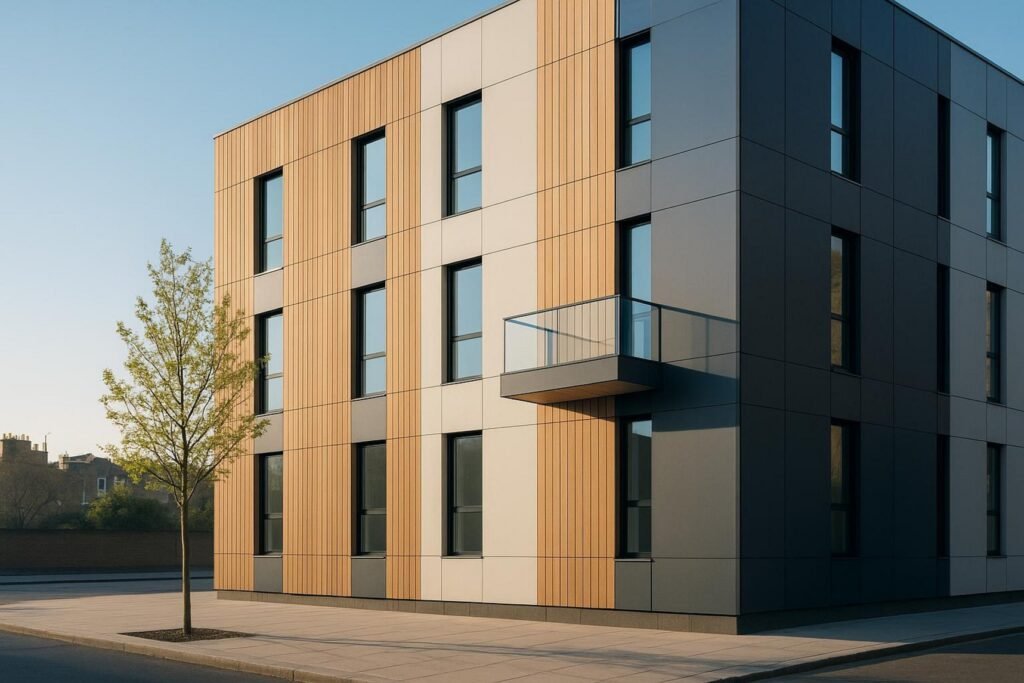
London’s buildings range from Victorian properties to modern commercial developments. Many commercial sites use several types of panels and glazing on one elevation.
Each material has its own strength, porosity, and reaction to chemicals. A good maintenance plan must match the cleaning method to the exact cladding system installed on the building.
Composite and high-pressure laminate cladding
Aluminium composite materials (ACM) and high-pressure laminates (HPL) give mid-rise and high-rise buildings a smooth, modern appearance. However, their factory coatings can be scratched or damaged by strong chemicals, rough cleaning products, or hard scrubbing pads.
These panels can collect oily marks from traffic pollution and may develop mould along horizontal joints. Regular washing with neutral pH detergents and gentle rinsing products protects the gloss and colour of the laminate surface. It also lowers the risk of water moving into the panel core.
UPVC and vinyl cladding
UPVC and vinyl cladding are common on modern residential blocks and smaller commercial buildings. They resist rot and need little basic maintenance. However, plastic profiles can build up static electricity, which attracts road dust and creates visible grey streaks.
Without regular washing, vinyl exposed to sunlight can become brittle and develop heavy surface oxidation. Gentle cleaning with soft brushes and suitable surfactants removes traffic film and brings back the original shine without scratching the softer outer surface.
Aluminium and steel cladding
Industrial buildings, distribution centres, and large office facades often use profiled steel and aluminium panels. Aluminium forms a natural oxide layer that gives some protection, but long exposure to acidic city deposits or salty coastal air can cause pitting and surface marks.
Coated steel cladding is often protected with plastisol or polyester finishes. It can develop edge corrosion where water reaches cut panel edges. Regular cleaning removes acidic residue and gives workers a chance to find early edge corrosion. Protective touch-ups can then be completed before the damage affects the structure.
Timber cladding
Hardwood, softwood, and modified timber such as cedar and larch add a natural look to urban buildings. They are also very sensitive to trapped moisture. Algae, moss, and dirt can hold water against the timber, causing bacterial decay, soft fibres, and severe water marks.
Timber needs a gentle cleaning process that removes biological growth without damaging the grain or forcing water deep into the wood. After the surface has been cleaned and allowed to dry, the timber can continue to release moisture naturally and receive further preservative treatment.
Brick and stone cladding
Brick slips and natural stone panels provide strong exterior protection, but their porous surfaces can absorb London pollution and develop efflorescence. Traffic particles move into the mineral pores and can turn pale sandstone and traditional brickwork a dull, uneven grey.
Stone can also suffer faster damage if strong acid washes are used without care. Suitable maintenance may involve low-pressure steam or specialist biocidal solutions. These methods lift dirt and remove fungal spores without wearing away the stone or damaging mortar joints.
Glass and glazed facade systems
Curtain walling and large glazed systems are common on leading London office buildings. Glass shows water marks, mineral deposits, and traffic film very clearly. Even a small amount of grime can reduce transparency and make the facade look untidy.
Regular glass cleaning often uses purified water to remove dissolved solids and reduce spotting as the surface dries. Workers must also check the silicone seals around the glass and the drainage openings. These areas need to remain clear so rainwater can run away instead of collecting around the edges of the glazing.
What Problems Can Regular Cladding Cleaning Help Prevent?
Neglected exteriors can suffer a chain of visual and physical problems. Pollutants left on the surface react with moisture and sunlight, placing stress on the building envelope.
Regular cleaning breaks this cycle. It stops small amounts of dirt and residue from becoming deeper facade problems that could affect occupants, building compliance, and the value of the property.
Black staining from traffic pollution and soot
Black carbon staining is a common problem across London, especially near busy roads, transport routes, orbital roads, and railway junctions. Fine particles settle on textured panels and building copings. Rain then creates dark vertical marks and drip patterns.
As time passes, carbon residue can react with the surface and become harder to remove. Regular facade cleaning clears the soot before it sets. This helps prevent permanent shadow-like staining that may later need strong and damaging chemical treatments.
Organic growth from algae, moss and moisture
Damp city conditions and limited sunlight create good conditions for algae and moss. These organisms release acidic substances that can weaken mineral binders and damage protective paint resins.
If they are left in place, algae and moss hold extra moisture against cladding and inside movement joints. This can cause panels to warp or swell and may contribute to freeze-thaw damage during winter. Planned soft washing and preventative biocides remove the growth at its roots and reduce the chance of it spreading across the facade again.
Surface corrosion and failed protective coatings
Factory coatings protect cladding from weather, but grit, abrasive dust, and acidic deposits can create tiny breaks in the surface. Once pollutants pass through these weak points, corrosion can spread beneath the coating without being seen.
This may lead to filiform corrosion, blistering, and peeling paint or anodized finishes. Regular washing removes corrosive materials and protects the surface barrier. It also helps the finish keep its flexibility and resistance to chemical damage.
How Often Should London Properties Have Their Cladding Cleaned?
The right cleaning interval depends on the level of risk, access arrangements, and local exposure. No single schedule works for every London postcode or building design.
Facilities managers need to review local weather, the building’s direction, and its design features. This allows them to create a cleaning plan that protects the property without causing avoidable disruption or extra expense.
A practical starting point of two to four cleans per year
For many commercial and high-density residential buildings in Greater London, two to four maintenance cleans each year provide a useful starting point. A twice-yearly clean, often carried out in late spring after winter road gritting and again in autumn, controls general soot and biological growth.
High-street shops, corporate headquarters, and buildings beside major roads may need cleaning every three months to keep a consistently clean appearance. Frequent cleaning stops pollutants from sinking into the material, so each visit can be quicker, gentler, and less expensive.
Factors that change the recommended cleaning schedule
Local conditions can change how often a building needs cleaning. Properties beside construction sites, bus depots, or mainline rail routes receive heavier loads of airborne particles. They may need more frequent washing to control soot.
The shape of the building also matters. Horizontal ledges, detailed louvres, and shaded recesses collect dirt and hold water more quickly than smooth vertical glass. Facades facing damp winds or surrounded by many trees may also need more frequent treatment for algae and moss than open elevations that receive strong sunlight.
How Should Different Cladding Materials Be Cleaned?
Using the wrong cleaning method on a modern facade can cause lasting damage. Possible problems include etching, uneven colour, and damaged moisture barriers. Many commercial buildings use several materials next to each other, so one method may not work for every surface.
Professional cleaning teams should check the porosity, strength, and chemical resistance of each material. They can then choose methods that remove dirt safely without placing strain on the panel system.
When soft washing and low-pressure cleaning are suitable
Soft washing is a useful method for delicate modern surfaces such as rendered facades, high-pressure laminates, coated composite panels, and treated timber. It uses a large amount of water at low pressure with specialist, environmentally considerate biocidal products. These products break down organic growth and loosen traffic soot.
Because soft washing does not use the strong force of standard pressure washing, it lowers the risk of forcing water through rainscreen joints, soaking insulation inside the cavity, or damaging factory warranties. It provides a gentle clean and leaves a sanitising effect that can slow the return of algae and lichen.
When manual cleaning is safer than pressure washing
High-pressure jets are not suitable for detailed facades, glazed systems, or thin metal sheets that can dent or allow water inside. In these cases, hand cleaning with microfiber tools, telescopic poles, and soft-bristle brushes is safer and often more effective.
Manual cleaning lets workers feel changes in the surface and adjust their pressure as they move across expansion joints, mastic seams, and edge seals. For heavy dirt or sensitive finishes, applying a neutral detergent by hand provides a thorough clean without sending pressurised water into hidden wall cavities.
How to follow manufacturer cleaning recommendations
Each cladding manufacturer provides technical instructions covering approved chemicals, water temperatures, and cleaning intervals. Ignoring these instructions and using strong solvents or harsh alkaline products can remove protective films, cause chalking, or cancel warranty cover.
A responsible maintenance plan checks the technical information before work begins. Testing the chosen product on a small, hidden section of cladding shows whether it removes pollution without changing the surface shine, colour, or protective layer.
Should London Property Owners Hire Professional Cladding Cleaners?
Cleaning the exterior of a multi-storey building is a high-risk task that is usually beyond the skills and equipment of a general maintenance team. Work at height in a busy city involves legal requirements, specialist access systems, and risks to the public.
Using certified facade cleaning specialists helps the work take place safely, with less disruption, and in line with UK environmental and workplace safety rules.
When professional equipment and specialist access are required
Modern buildings often have tall elevations, steep drops, and very little space at ground level. This makes ordinary ladders and scaffolding unsuitable. Professional cladding cleaners use access systems suited to the site, including mobile elevating work platforms (MEWPs) and industrial rope access.
Rope access technicians can reach complex high-rise facades, atriums, and narrow city spaces without blocking roads or interfering with businesses at ground level. When combined with high-reach pure-water pole systems, professional teams can safely clean difficult areas of the building.
How trained cleaners reduce damage and health and safety risks
Work at height is controlled by the Work at Height Regulations 2005. These rules require workers to have suitable training, proper supervision, and certified personal protective equipment. Untrained people carrying out exterior cleaning may face serious fall risks, falling object hazards, and electrical dangers near overhead cables.
Qualified cleaners also help protect the building. They understand weight limits, know how to avoid directing water into drainage openings, and can handle cleaning chemicals safely. This protects occupants, workers, the public, and the exterior materials.
What to check in a cladding cleaning company
Property owners and facilities managers should check a contractor’s training, accreditations, and compliance records before appointing them. Reliable contractors may hold recognised safety credentials such as IRATA certification for rope access, IPAF certification for mobile access platforms, and SSIP-backed accreditations such as SafeContractor or Constructionline Gold.
Check that the contractor has suitable public liability insurance and can provide site-specific Risk Assessments and Method Statements (RAMS). A reliable company should also provide clear records from before and after the clean. These records give managers proof of the facade condition and support future property maintenance planning.
Integrating Cladding Care into Building Life Safety and Asset Stewardship
Modern building rules connect facade maintenance with building safety and long-term care of property assets. Under the UK’s developing building safety framework, owners and duty holders must keep a clear “golden thread” of building information. This record should show structural and material work carried out on higher-risk residential and commercial buildings. Cladding cleaning is no longer just a routine housekeeping cost. It forms part of building safety checks by showing that exterior materials are inspected, monitored, and kept clear of combustible waste and physical damage.
Many property owners also judge exterior maintenance by its effect on whole-life carbon. Under RICS Whole Life Carbon Assessment standards, the carbon linked to early facade replacement can harm a property’s sustainability record. Extending the life of existing cladding through non-destructive cleaning avoids much of the carbon linked to making, transporting, and fitting new exterior systems. Collecting wash water and disposing of trade effluent in line with UK environmental rules completes a responsible maintenance process. Clean, regularly checked facades can then support safer and more sustainable London properties.