A research poster gives you a chance to share your work with researchers, students, and industry experts. At a large conference, hundreds of posters may compete for attention, so your design needs to make people stop and read. A0 poster printing is a popular choice for presenting research because it provides enough space for charts, images, key findings, and clear text.
A good poster does more than display research results. It helps visitors understand your main idea quickly and encourages them to ask questions. With the right layout, colours, fonts, and print quality, you can present your work in a clear and professional way.
Plan Your Poster Layout
Before designing your poster, decide which information matters most. Conference visitors often have limited time, so they should understand your research without reading every sentence.
Start with a clear title, followed by a short introduction, research objectives, methods, results, and conclusion. Arrange these sections in a logical order that guides readers across the poster.
Keep these design tips in mind:
- Use columns to separate different sections.
- Leave enough space between headings and paragraphs.
- Highlight important findings with charts or short statements.
- Avoid filling every available space with text.
- Keep related information together.
A balanced layout makes your research easier to follow and helps visitors find the information they need.
Choose A0 Poster Printing for Large Displays
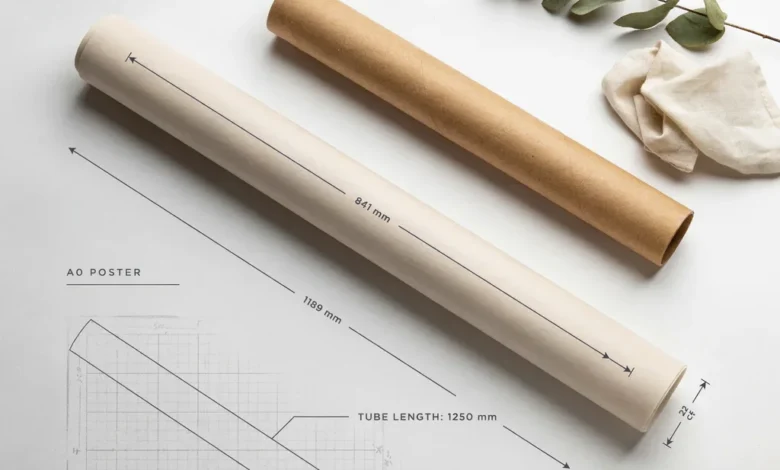
A0 poster printing offers a generous display area for detailed research presentations. The standard A0 size measures 841 × 1189 mm, making it suitable for university conferences, scientific events, academic exhibitions, and research showcases.
This format works well when you need to present several charts, diagrams, tables, and sections without making the content feel crowded. It also gives you more room to organise information into clear columns.
Before selecting this size, check the conference guidelines. Some events specify exact poster dimensions, orientation, mounting methods, or material requirements. Confirming these details before printing can help you avoid last-minute changes.
Make Your Title Easy to Read
Your title is usually the first thing people notice. It should explain the subject of your research in simple language and remain readable from a reasonable distance.
Use a large, bold font and place the title near the top of the poster. Keep it concise where possible, and avoid unnecessary words that make it difficult to understand.
You should also give your name, institution, and relevant logos enough space without allowing them to compete with the main heading. A clear title helps visitors decide whether your research matches their interests.
Use Fonts and Colours Wisely
Good typography makes a research poster easier to read. Choose simple fonts such as Arial, Calibri, or Helvetica, and use the same font family throughout the design.
Create a clear difference between headings, body text, captions, and key findings. As a starting point, you might use:
- Title: 72–100 pt
- Section headings: 32–40 pt
- Body text: 24–30 pt
- Captions: 18–22 pt
These sizes are guidelines rather than strict rules. Check a full-size proof to ensure the text remains readable.
Choose two or three main colours that work well together. Dark text on a light background usually offers good contrast. Avoid too many bright colours, decorative fonts, or patterned backgrounds that distract readers from your findings.
Present Results With Charts and Images
Charts, diagrams, and photographs can explain complex information faster than long paragraphs. Select visuals that support your findings instead of adding images simply to fill empty spaces.
Make sure every chart has readable labels, clear units, and a useful caption. Use high-resolution images to prevent blurry results when enlarged for printing.
For research poster printing, prepare your file at the correct dimensions and use high-quality graphics. Vector formats are useful for logos and diagrams because they retain sharp edges when resized. Check image resolution and follow your printer’s requirements for colour settings, file formats, and bleed.
Keep the Text Short and Useful
A conference poster is not a full research paper. Visitors should be able to scan the main points quickly and understand why your work matters.
Replace long paragraphs with short explanations, bullet points, and clear statements. Focus on the research question, key methods, strongest results, and practical importance of your findings.
Proofread the content carefully before sending it to print. Check spelling, references, chart labels, author details, and institutional names. Even a small error can affect the professional impression your poster creates.
Prepare Your File for Printing
Once your design is complete, review it at full size. Text that looks clear on a computer screen may be difficult to read when printed, so inspect the layout carefully.
Before ordering A0 poster printing, check the following:
- Confirm the final dimensions and orientation.
- Use high-resolution images and graphics.
- Embed fonts or convert them as required.
- Check margins, alignment, and text spacing.
- Review colours and image quality.
- Export the file in the printer’s preferred format.
- Request a proof if available.
Professional printing can help your poster look sharp, with consistent colours and clear text. Choosing suitable paper or display material also matters, especially if the poster will be handled, transported, or displayed for several days.
Conclusion
A successful conference poster combines clear research, readable text, strong visuals, and a well-planned layout. A0 poster printing gives you enough room to present detailed findings while keeping the information organised and easy to scan.
Plan your design around the most important results, use consistent fonts and colours, and check every detail before placing your order. If you need a polished finish for an upcoming academic event, professional research poster printing can help you present your work with confidence and make a strong impression on conference visitors.